A printer does not need to occupy prime desk space if you can keep it close enough to use while moving it to a secondary zone.
A printer does not need to occupy prime desk space if you can keep it close enough to use while moving it to a secondary zone. Start with what interferes with movement or daily use, then choose the simplest solution you can maintain.
6 ways to solve the problem
Use a narrow rolling cartA small cart can sit beside or under the desk and roll out for access.
Use a shelf beside the deskA sturdy shelf at a practical height moves the printer off the work surface.
Use a cabinet top you already ownIf ventilation and access are adequate, an existing nearby surface may be enough.
Consider under-desk placement carefullyOnly use the area if it does not reduce legroom, block controls, or create cable hazards.
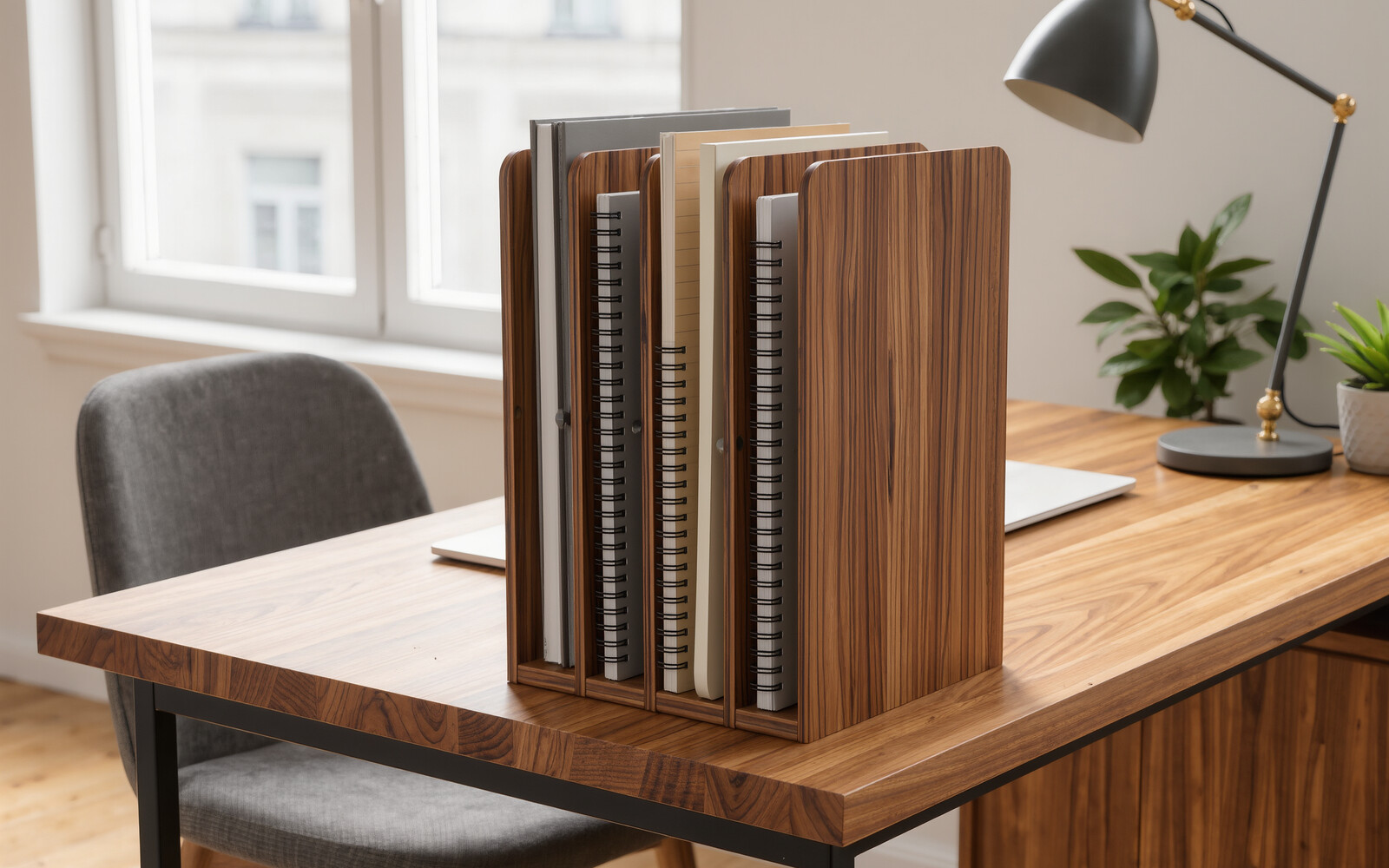
Store paper vertically nearbyKeep paper and supplies in a file holder rather than stacking them around the printer.
Match access to frequencyIf you print once a month, the printer does not deserve the same prime position as equipment used every hour.
Small-space rule
Measure the circulation path and working zone first. Storage only helps when it improves access without making movement harder.
Why this approach works
In a small room, every addition has to justify its footprint. The most durable solutions use space that already exists, reduce the number of steps needed to put things away, and keep frequently used items easy to reach.
Before buying an organizer, test the idea with what you already own and verify the dimensions. That prevents a storage problem from turning into a crowding problem.
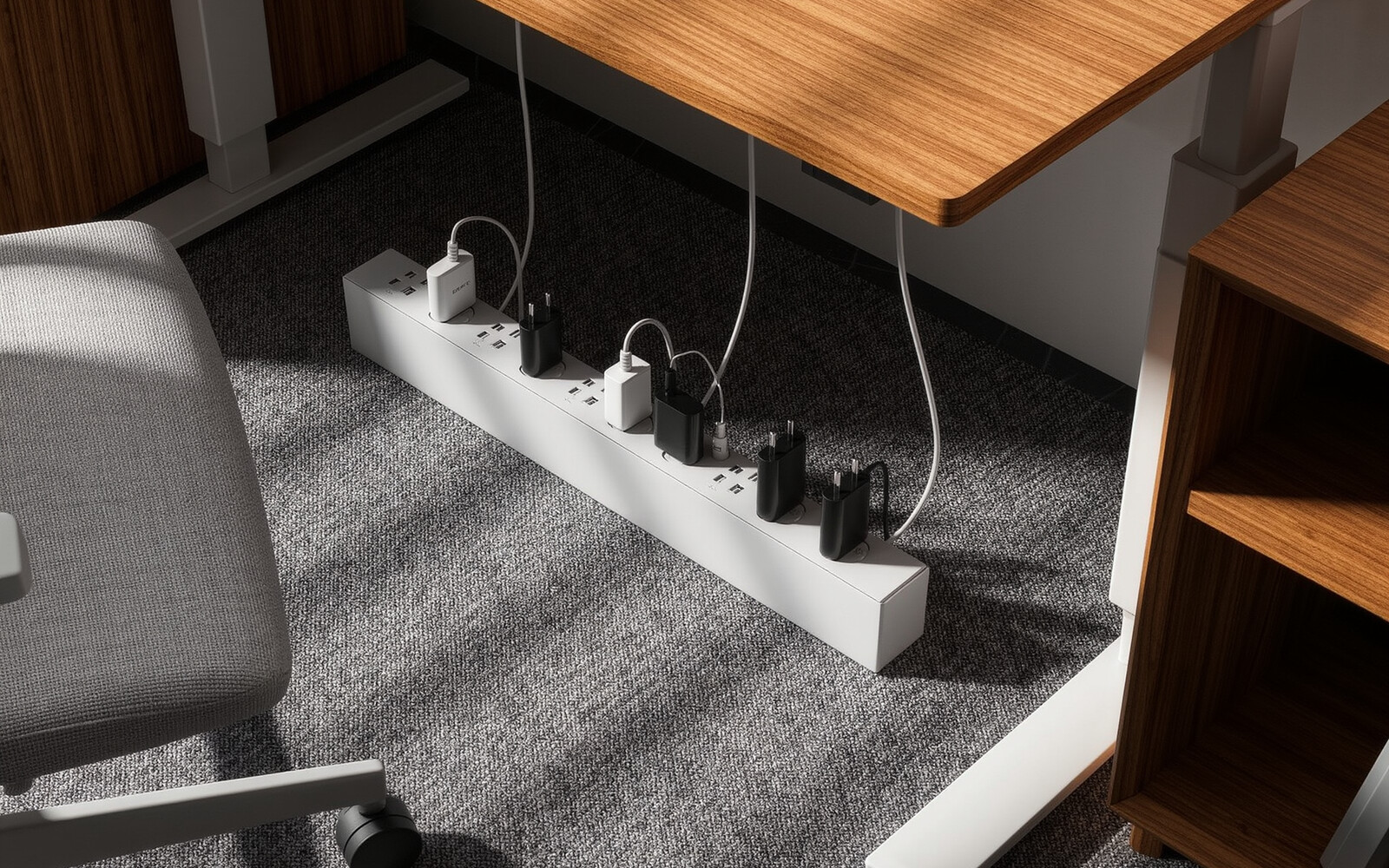
Reject ifThe holder blocks switches, traps heat or makes the power strip hard to isolate safely.
No solution is shown for this filter. Show all solutions and compare the fit checks manually.
How we evaluate a small-space solution
We do not rank a solution just because it is compact. We first identify the space problem, the limiting measurement, the operating clearance and the installation constraint. A product is worth considering only when its current listing dimensions and use requirements fit those limits.
Our rule: solve the constraint first, compare at least two viable options, and reject anything that creates a new circulation, access or maintenance problem.
Before buying: compare 2–3 viable options. Check dimensions, operating clearance, installation method, return conditions and current price—not just the product photo.
Visuals are illustrative and show the solution type, not necessarily the exact product. Some product links may earn us a commission at no extra cost to you. Always verify dimensions, mounting surface, load limits and clearances on the product listing.
We use the Pinterest tag only with your permission to measure visits and conversions coming from Pinterest. Learn more