Shoe Storage for a Narrow Hallway: 6 Space-Saving Approaches
In a narrow hallway, shoe storage has to control depth first. A beautiful cabinet that blocks circulation is not a space-saving solution.
In a narrow hallway, shoe storage has to control depth first. A beautiful cabinet that blocks circulation is not a space-saving solution. Start with what interferes with movement or daily use, then choose the simplest solution you can maintain.
6 ways to solve the problem
Measure the walking lineMeasure the narrowest usable passage before choosing any storage.
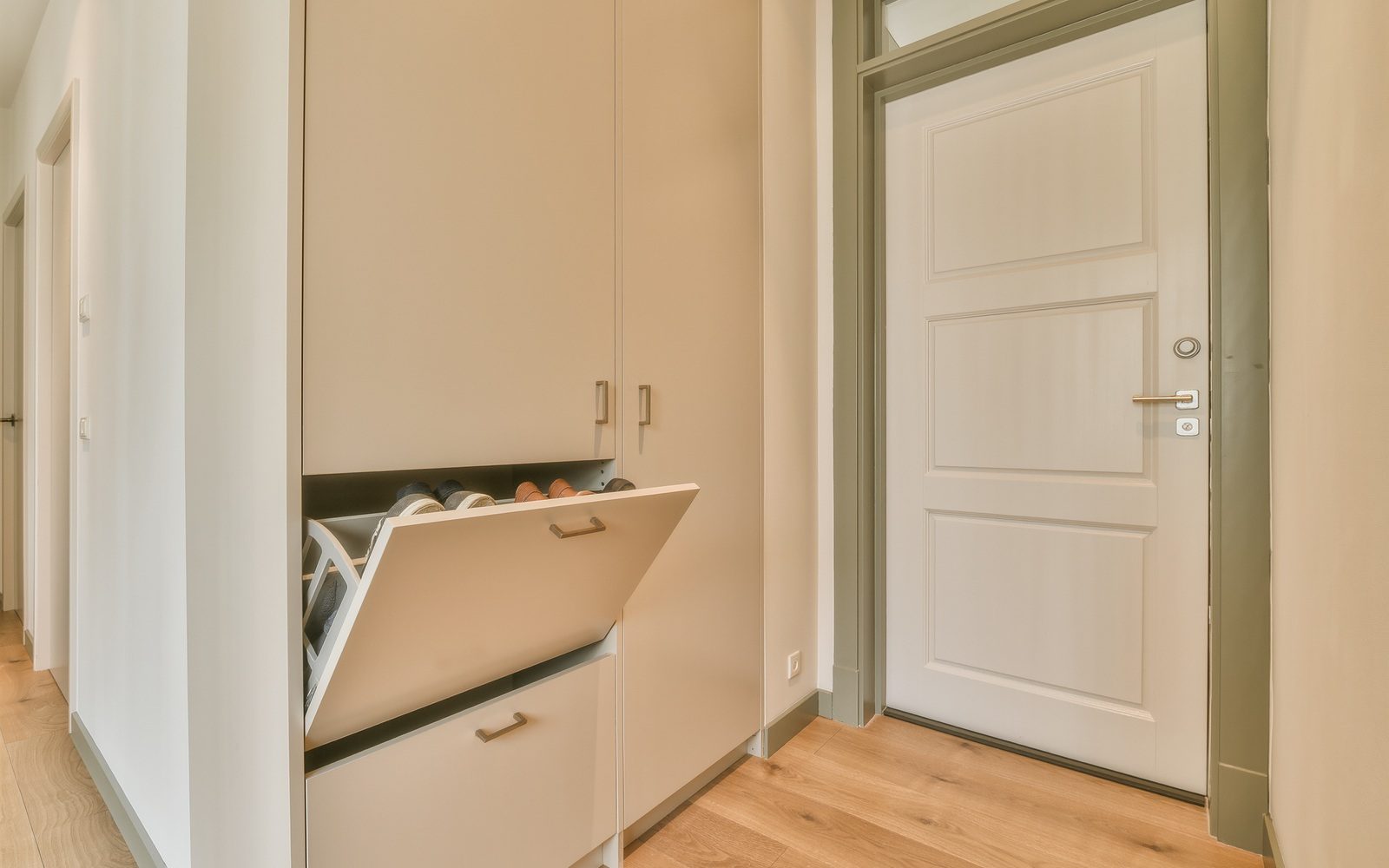
Prefer tilt-out or vertical formatsShallow cabinets can store shoes at an angle instead of projecting deeply into the hall.
Keep only the active rotation by the doorStore the current few pairs here; move occasion and off-season shoes elsewhere.
Use low wall space carefullyWall-mounted shoe racks can free the floor while keeping depth controlled.
Give wet shoes a temporary zoneUse a washable tray only when needed instead of permanently filling the floor.
Avoid open pilesIf shoes cannot return to a defined slot quickly, the system is too complicated or too small.
Small-space rule
Measure the circulation path and working zone first. Storage only helps when it improves access without making movement harder.
Why this approach works
In a small room, every addition has to justify its footprint. The most durable solutions use space that already exists, reduce the number of steps needed to put things away, and keep frequently used items easy to reach.
Before buying an organizer, test the idea with what you already own and verify the dimensions. That prevents a storage problem from turning into a crowding problem.
Start with the constraint, verify fit, then buy only when the dimensions and operating space match your room.
1 · DIAGNOSE
Protect passage width before adding shoe capacity. Depth is the first specification, not the number of pairs.
2 · MEASURE
Measure the hallway at its narrowest point, door swing, skirting and the usable wall length.
3 · FIT TEST
Maximum storage depth = hallway width minus the clear passage you choose to protect.
4 · REJECT IF…
Reject anything that forces sideways walking, enters the door swing, creates a trip edge or cannot be opened while someone passes.
MEASURE → FILTER → VERIFY
Protect the passage first
Measure the maximum depth you can add while keeping your required walkway clear.
cm
What function matters most?
What your filter meansShowing all solution types. Add a measurement and choose the usable zone to narrow the shortlist.
FIT FILTER 1
Get shoes off the walkway
Use this solution type only after it passes the fit checks below.
Best whenShoes spread into the path and a shallow wall-aligned unit can contain them.
Measure thisHall width, required clear passage, unit depth including handles/tilt-open movement and skirting.
Reject ifThe operating depth exceeds your limit, doors/tilt bins cannot open safely or larger shoes do not fit.
FIT FILTER 2
Add a surface without narrowing the passage
Use this solution type only after it passes the fit checks below.
Best whenYou need a key/mail landing spot but storage depth is extremely limited.
Measure thisConsole depth, wall length, door swing and protrusion at hip/shoulder height.
Reject ifThe surface becomes a clutter shelf, projects beyond your depth limit or competes with shoe-storage space.
FIT FILTER 3
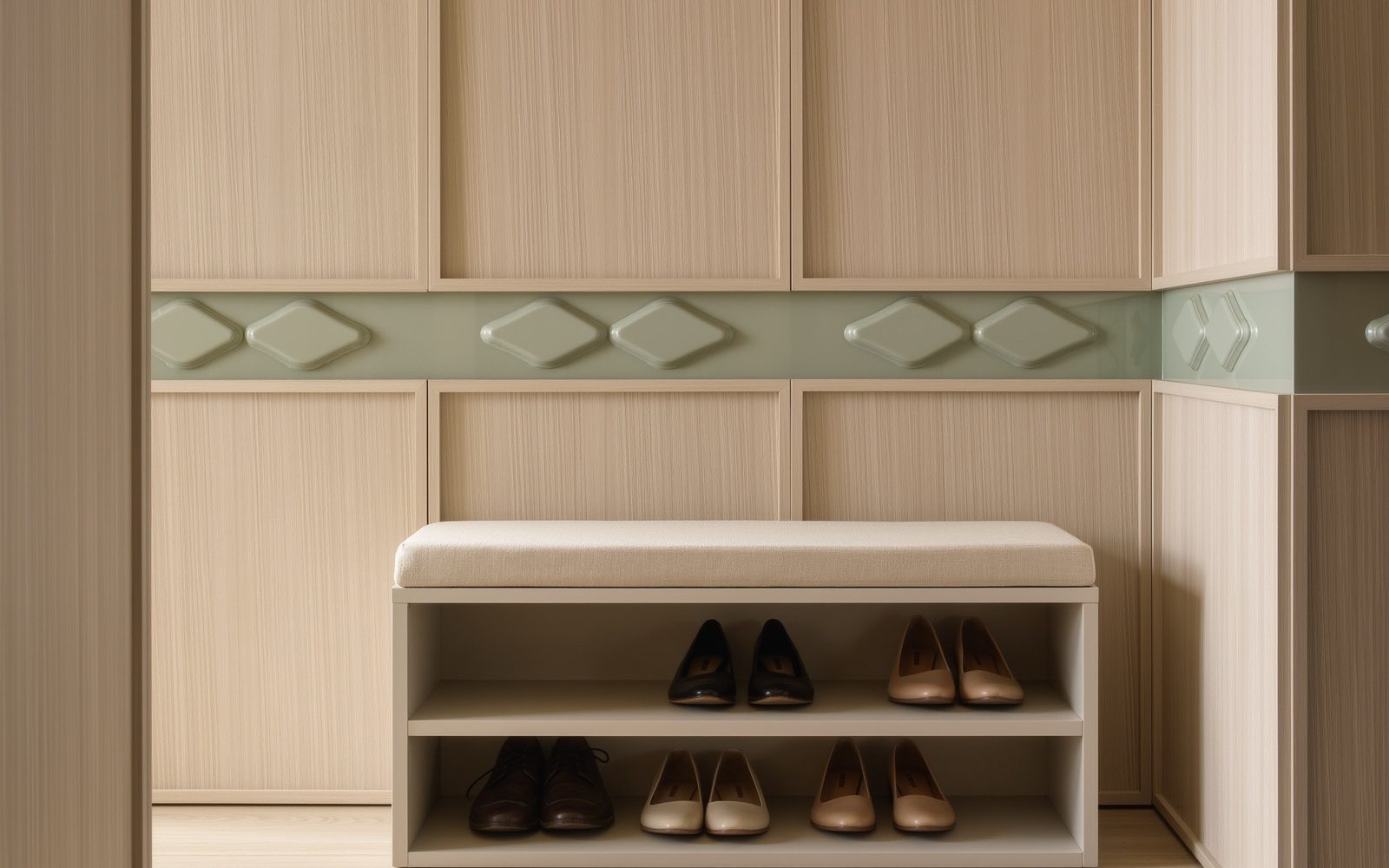
Combine seating and shoe storage
Use this solution type only after it passes the fit checks below.
Best whenYou genuinely need a sit-down shoe-change point and have enough width outside the main route.
Measure thisBench depth/width, seat height, door swing and clear passage with a person seated.
Reject ifSeating blocks circulation, the bench cannot store your shoe sizes or it creates a pinch point at the entrance.
No solution is shown for this filter. Show all solutions and compare the fit checks manually.
How we evaluate a small-space solution
We do not rank a solution just because it is compact. We first identify the space problem, the limiting measurement, the operating clearance and the installation constraint. A product is worth considering only when its current listing dimensions and use requirements fit those limits.
Our rule: solve the constraint first, compare at least two viable options, and reject anything that creates a new circulation, access or maintenance problem.
Before buying: compare 2–3 viable options. Check dimensions, operating clearance, installation method, return conditions and current price—not just the product photo.
Visuals are illustrative and show the solution type, not necessarily the exact product. Some product links may earn us a commission at no extra cost to you. Always verify dimensions, mounting surface, load limits and clearances on the product listing.
We use the Pinterest tag only with your permission to measure visits and conversions coming from Pinterest. Learn more