When an entryway is too narrow for furniture, the useful storage zones are the wall, the door, and the vertical space above everyday reach. Start with what interferes with movement or daily use, then choose the simplest solution you can maintain.
6 ways to solve the problem
Start with hooks at two heightsGive coats and bags separate hook levels so they do not form one bulky cluster.
Add one shallow landing shelfA narrow shelf can hold keys and mail without creating a knee-level obstacle.
Use the back of the doorA slim over-door organizer can hold scarves, umbrellas or small accessories.
Move occasional items upwardA high shelf works for seasonal accessories that do not need daily access.
Keep the floor visually openWall-mounted storage makes a narrow passage feel calmer and is easier to clean.
Set a capacity limitAssign a fixed number of hooks or baskets. Overflow is a signal to move items elsewhere.
Small-space ruleMeasure the circulation path and working zone first. Storage only helps when it improves access without making movement harder.
Why this approach works
In a small room, every addition has to justify its footprint. The most durable solutions use space that already exists, reduce the number of steps needed to put things away, and keep frequently used items easy to reach.
Before buying an organizer, test the idea with what you already own and verify the dimensions. That prevents a storage problem from turning into a crowding problem.
Continue with these guides
SOLUTION → FIT → PRODUCT
Concrete solutions for this exact problem
Start with the constraint, verify fit, then buy only when the dimensions and operating space match your room.
1 · DIAGNOSEMove daily-drop items to wall or door zones before considering another floor-standing piece.
2 · MEASUREMeasure usable wall/door area, door swing, coat/bag drop length, reachable height and nearby switches/intercoms.
3 · FIT TESTKeep the floor path clear and place frequently used items inside an easy reach zone.
4 · REJECT IF…Reject storage that interferes with the door, creates head/shoulder collisions, overloads fixings or pushes coats into the passage.
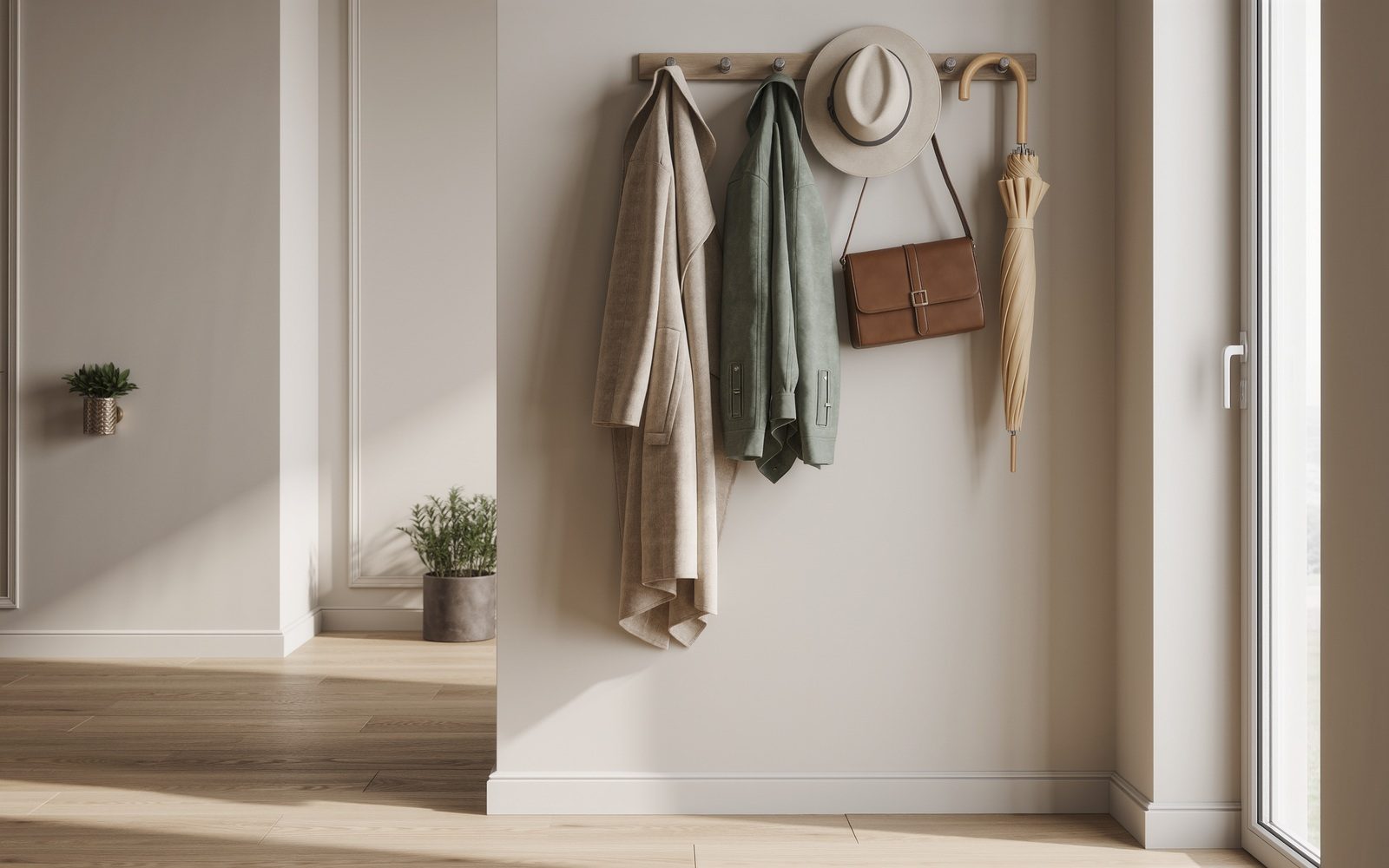
FIT FILTER 1Move coats and bags onto the wall
Use this solution type only after it passes the fit checks below.
Best whenYou have a clear wall zone near the entrance and need fast daily access.
Measure thisWall width, hook spacing, longest garment/bag drop, door swing and walking clearance.
Reject ifLoaded items project into the route, cover switches or the wall/fixings cannot support the intended load.
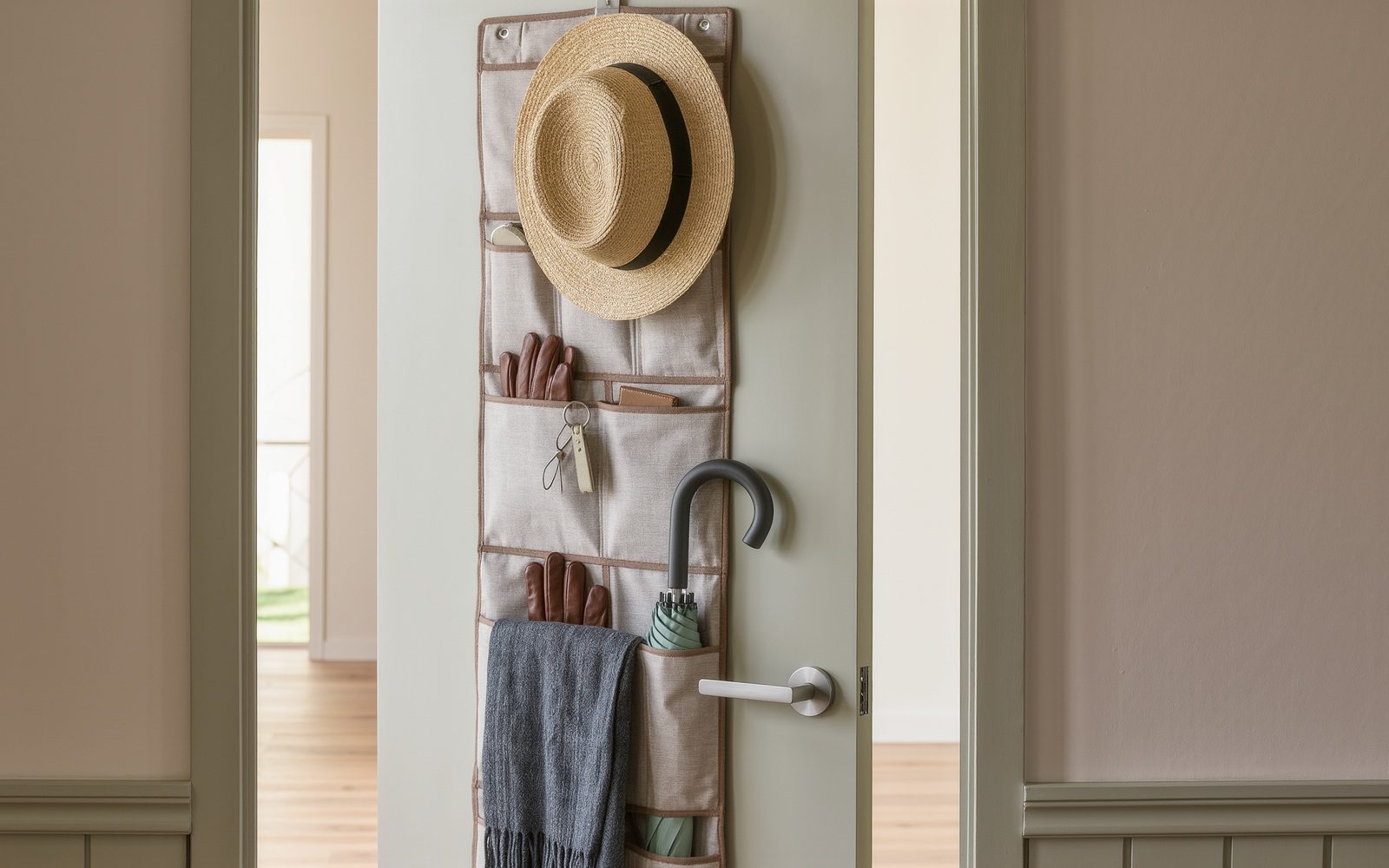
FIT FILTER 2Use the back of the door
Use this solution type only after it passes the fit checks below.
Best whenThe door opens freely and wall space is limited.
Measure thisDoor thickness, top clearance, organizer depth, handle/wall collision and hanging drop.
Reject ifThe organizer prevents closing/opening fully, scratches the frame/wall or makes the door too heavy.
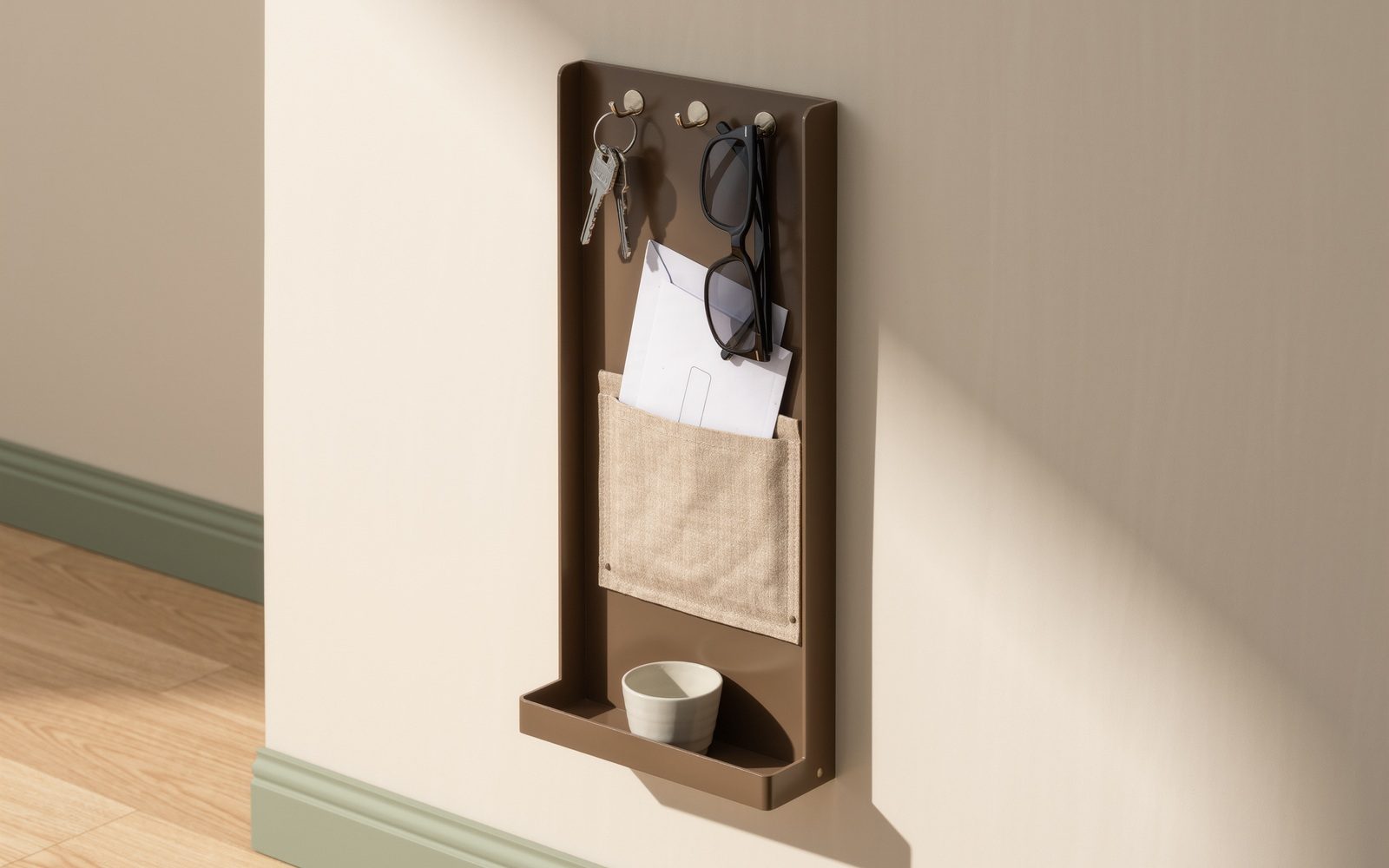
FIT FILTER 3Control keys, mail and small clutter
Use this solution type only after it passes the fit checks below.
Best whenSmall daily items accumulate on the nearest horizontal surface.
Measure thisWall width, reachable height, pocket/shelf depth and clearance from door swing.
Reject ifThe organizer becomes another deep shelf, is too high for daily use or projects into shoulder space.
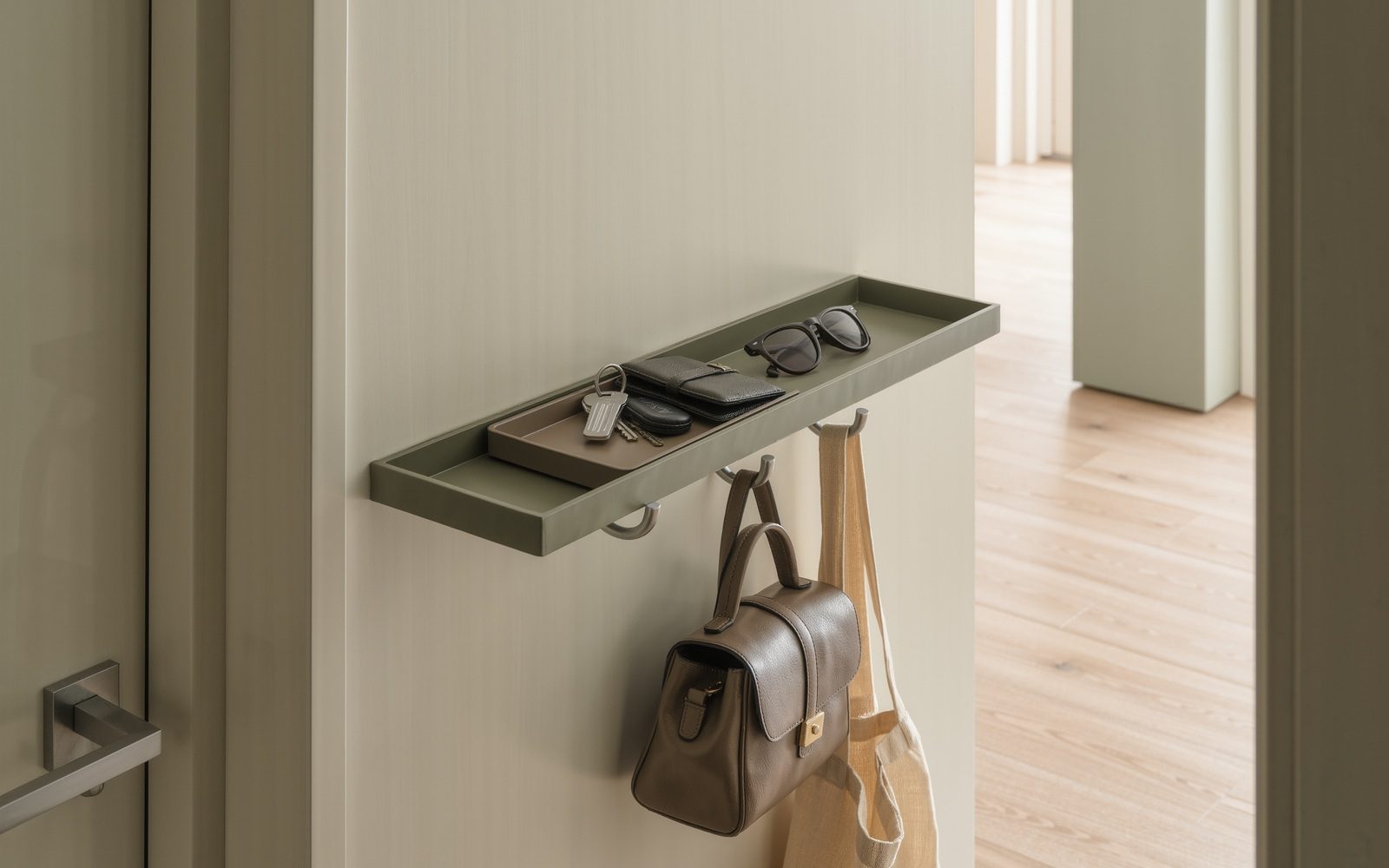
FIT FILTER 4Create a compact landing zone
Use this solution type only after it passes the fit checks below.
Best whenKeys, wallet and sunglasses are creating clutter because they have no single destination.
Measure thisAvailable wall/door width, reachable height, organizer depth and clearance from the door swing.
Reject ifIt projects into shoulder space, blocks a switch or becomes another uncontrolled dumping surface.
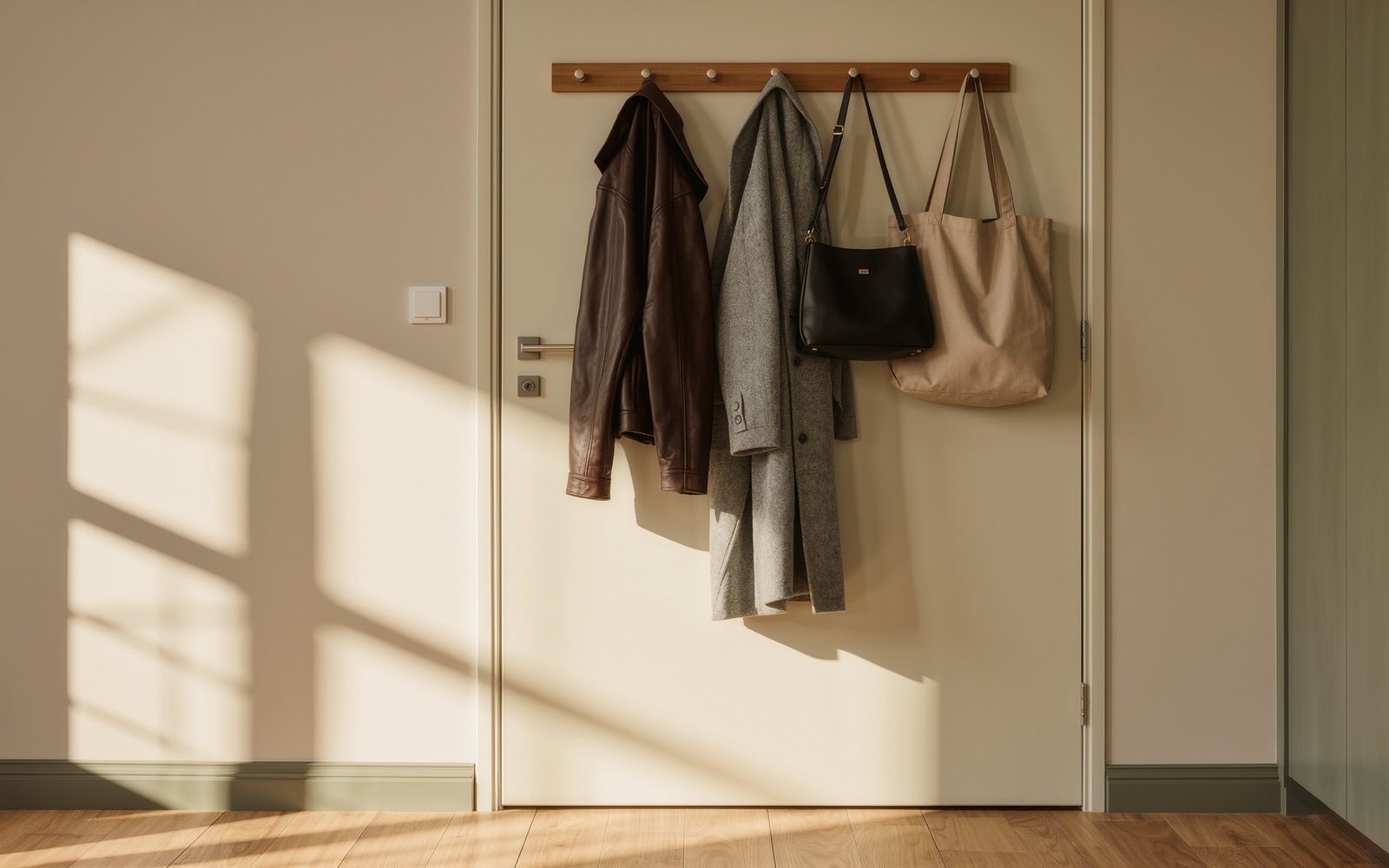
FIT FILTER 5Add door-mounted hooks
Use this solution type only after it passes the fit checks below.
Best whenYou need quick hanging storage but cannot dedicate a wall or floor footprint.
Measure thisDoor thickness, top clearance, hook depth, wall collision and longest item drop.
Reject ifThe hooks stop the door closing, hit the wall or make the loaded door awkward to operate.
Visuals are illustrative and show the solution type, not necessarily the exact product. Some product links may earn us a commission at no extra cost to you. Always verify dimensions, mounting surface, load limits and clearances on the product listing.
How we evaluate a small-space solution
We do not rank a solution just because it is compact. We first identify the space problem, the limiting measurement, the operating clearance and the installation constraint. A product is worth considering only when its current listing dimensions and use requirements fit those limits.
Our rule: solve the constraint first, compare at least two viable options, and reject anything that creates a new circulation, access or maintenance problem.