Before buying another cabinet, look for storage capacity in the furniture and surfaces already occupying the room.
Before buying another cabinet, look for storage capacity in the furniture and surfaces already occupying the room. Start with what interferes with movement or daily use, then choose the simplest solution you can maintain.
6 ways to solve the problem
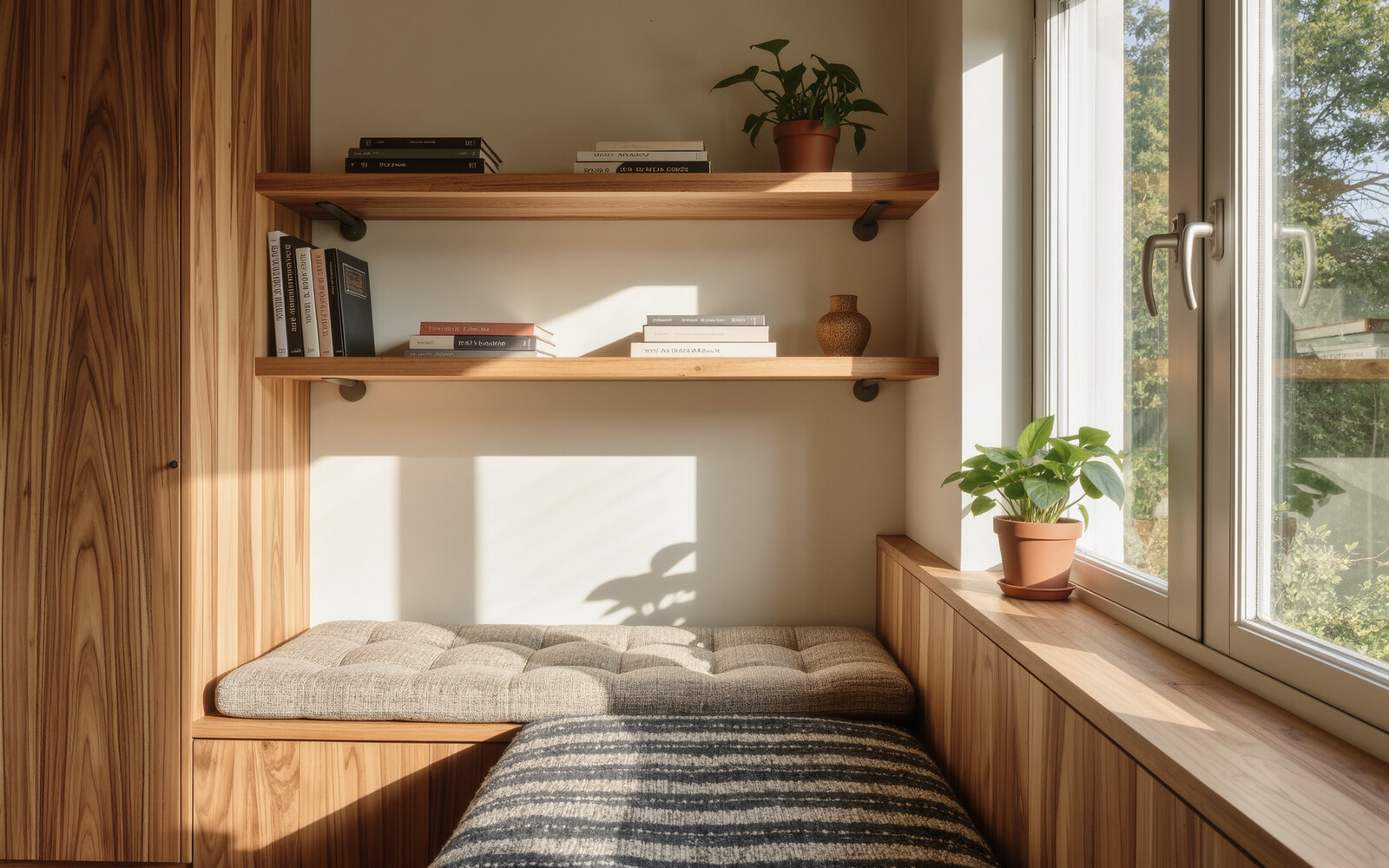
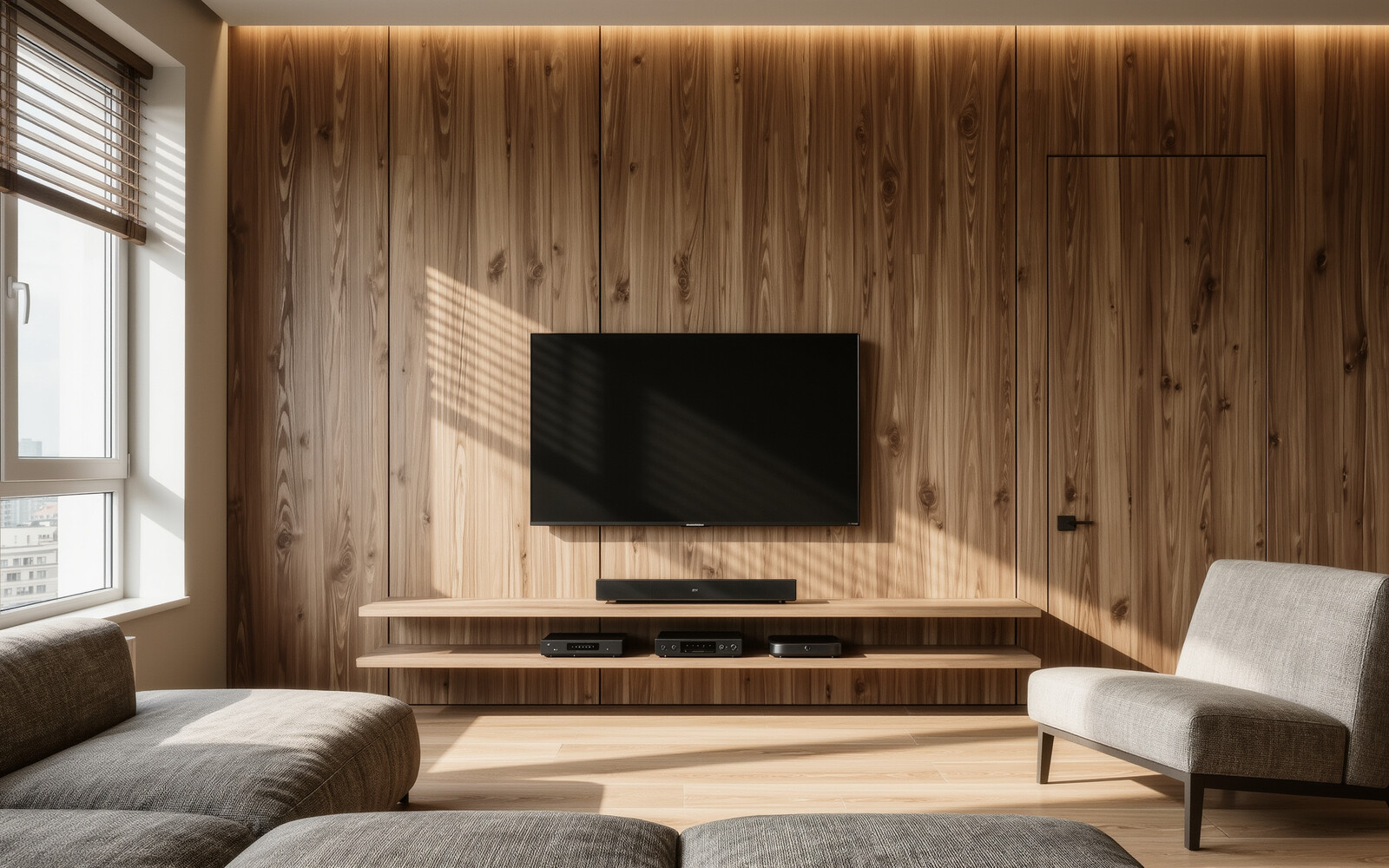
Use the wall above existing furnitureFloating shelves can add capacity without creating a second floor footprint.
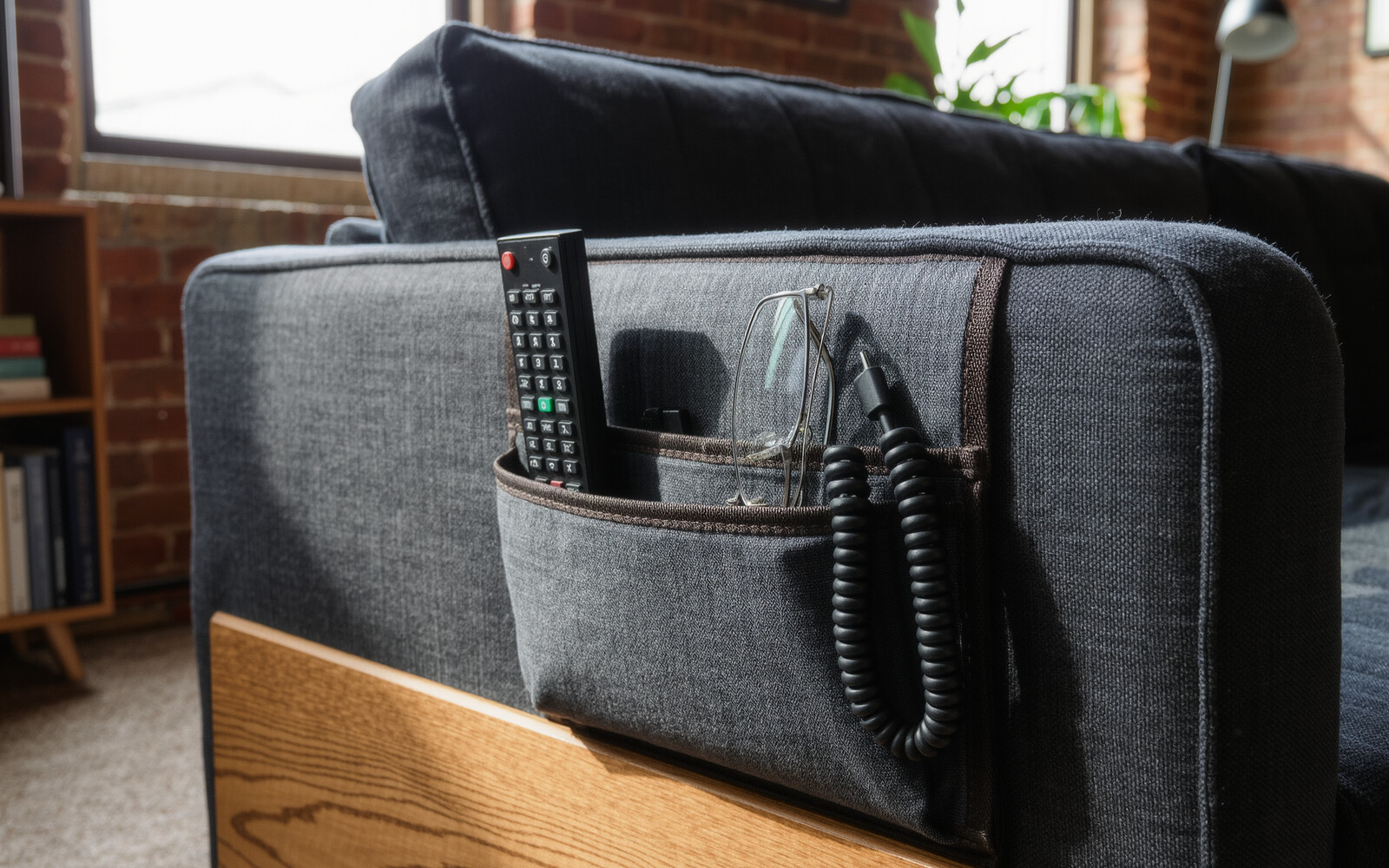
Give the sofa a storage roleUse a sofa-arm organizer or a slim basket beside an existing edge.
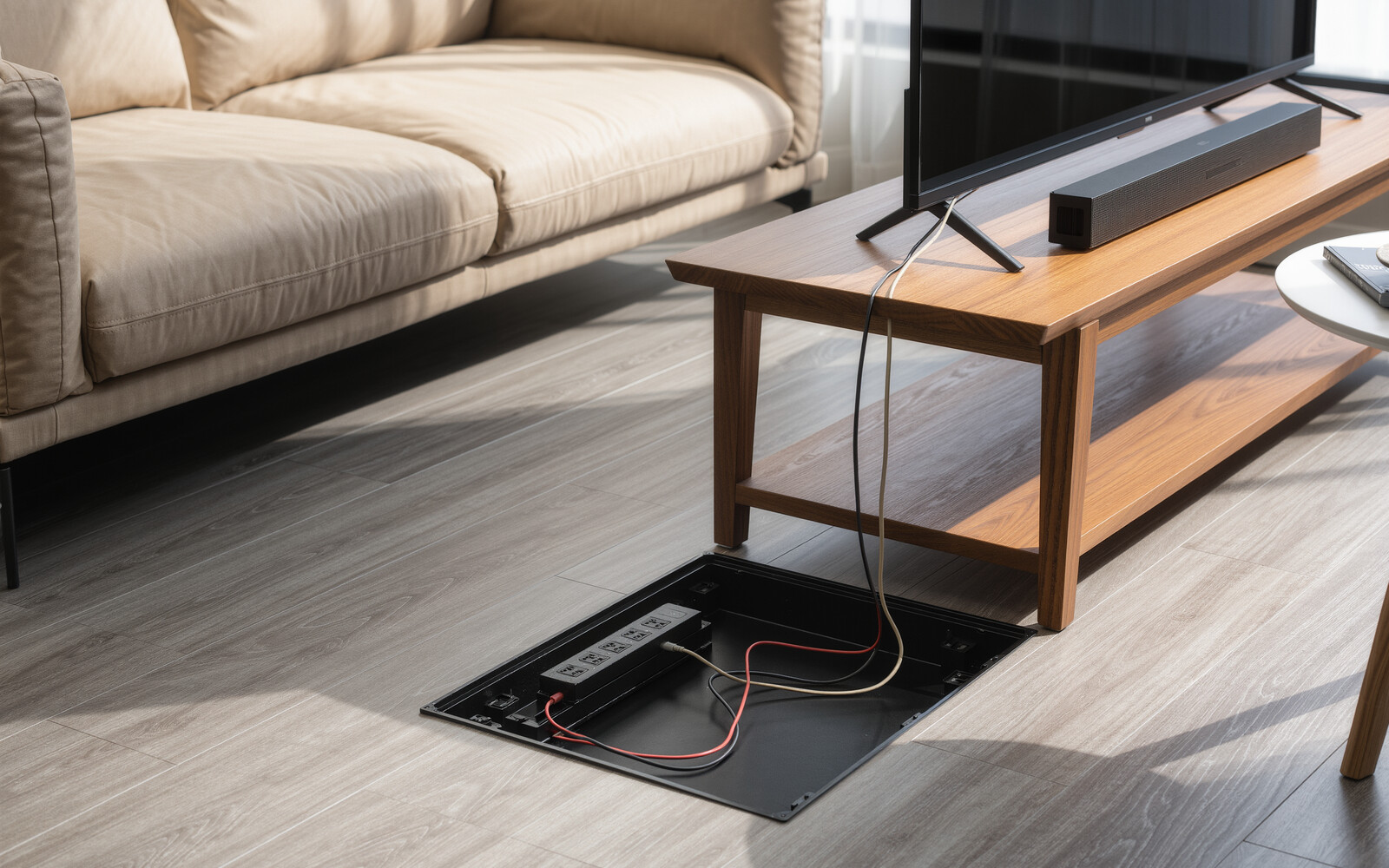
Hide cables at the sourceA cable box or mounted cable route reduces visual clutter without adding furniture.
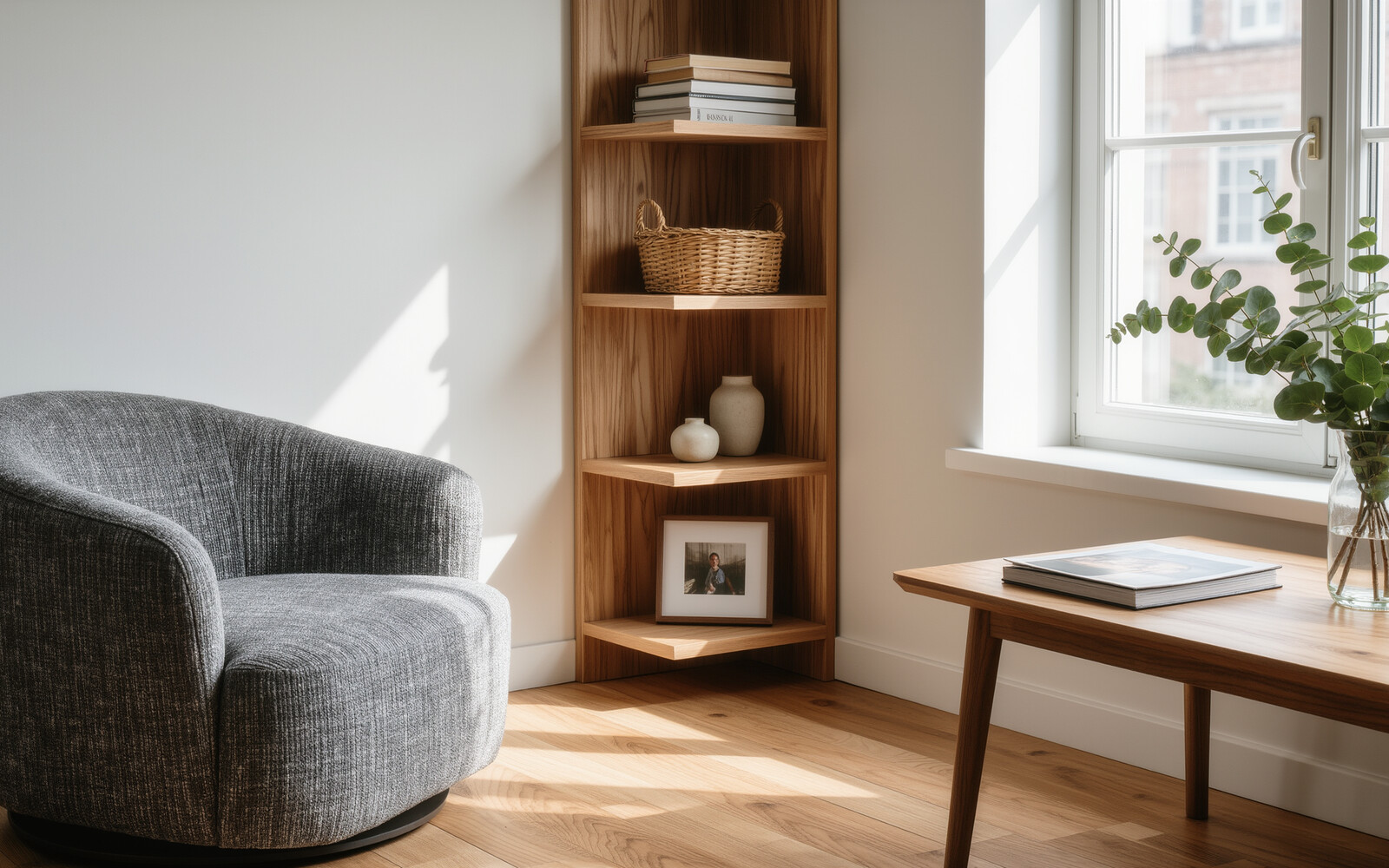
Use corners verticallyA compact corner shelf can occupy space that standard furniture ignores.
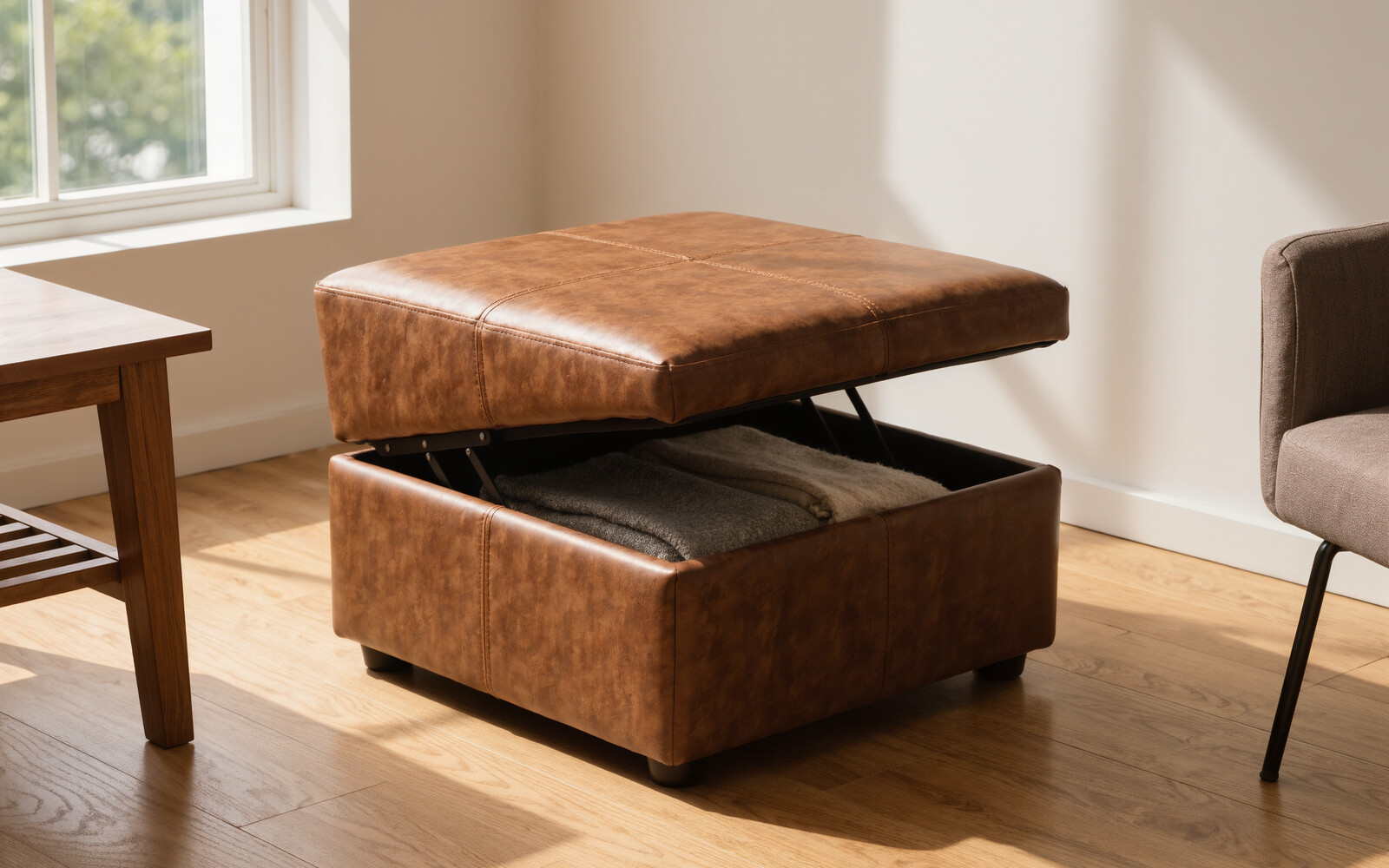
Choose dual-purpose seatingIf you need an ottoman, select one with internal storage rather than adding a separate bin.
Edit before expandingRemove duplicates and relocate rarely used items before deciding you need more storage.
Small-space rule
Measure the circulation path and working zone first. Storage only helps when it improves access without making movement harder.
Why this approach works
In a small room, every addition has to justify its footprint. The most durable solutions use space that already exists, reduce the number of steps needed to put things away, and keep frequently used items easy to reach.
Before buying an organizer, test the idea with what you already own and verify the dimensions. That prevents a storage problem from turning into a crowding problem.
Start with the constraint, verify fit, then buy only when the dimensions and operating space match your room.
1 · DIAGNOSE
Use surfaces you already have—walls, sofa edge and multifunctional pieces—before adding another cabinet.
2 · MEASURE
Measure wall spans, sofa dimensions, open floor path and any storage piece’s full operating footprint.
3 · FIT TEST
A solution should add capacity while keeping the same or smaller floor footprint in normal use.
4 · REJECT IF…
Reject anything that crowds seating, blocks circulation, interferes with curtains/doors or needs permanent floor area without replacing another function.
MEASURE → FILTER → VERIFY
Measure the storage zone, not just the object
Record the maximum depth that can project into the room without compromising circulation.
cm
Which existing zone can do more work?
What your filter meansShowing all solution types. Add a measurement and choose the usable zone to narrow the shortlist.
FIT FILTER 1
Floating wall shelves
Use this solution type only after it passes the fit checks below.
Best whenA clear wall zone can hold display or light storage without consuming floor area.
Measure thisWall width, shelf depth, mounting height, stud/wall type and clearance from heads, doors and curtains.
Reject ifThe shelf projects into head/shoulder space, the wall fixing is unsuitable or visual clutter would worsen.
FIT FILTER 2
Sofa-arm organizer
Use this solution type only after it passes the fit checks below.
Best whenRemotes, glasses and small items need a home but no side table fits.
Measure thisArm width/shape, drop length, seat clearance and pocket thickness when loaded.
Reject ifIt slips, interferes with sitting, traps the recliner mechanism or puts hard items against the user.
FIT FILTER 3
Folding storage ottoman
Use this solution type only after it passes the fit checks below.
Best whenYou need hidden storage and occasional seating/footrest in one footprint.
Measure thisOpen footprint, lid-opening clearance, load rating and where it sits when not used as a seat.
Reject ifIt becomes permanent circulation clutter, the lid cannot open where placed or it duplicates furniture you already have.
FIT FILTER 4
Use a compact corner shelf
Use this solution type only after it passes the fit checks below.
Best whenAn awkward corner is empty but the central floor area must stay open.
Measure thisCorner width/depth, shelf footprint, door/curtain swing and reach to upper shelves.
Reject ifIt creates a pinch point, blocks a curtain/door or encourages visual clutter.
FIT FILTER 5
Move media components onto a floating shelf
Use this solution type only after it passes the fit checks below.
Best whenSmall TV/media equipment is forcing you to keep a bulky console.
Reject ifFixings are unsuitable, equipment cannot ventilate or cables would remain exposed across the wall.
FIT FILTER 6
Contain the power strip and loose connections
Use this solution type only after it passes the fit checks below.
Best whenThe room looks cluttered mainly because plugs and cable junctions are exposed.
Measure thisPower-strip size, plug height, cable exits, airflow and access to switches.
Reject ifThe box traps heat, bends cables sharply or makes the power strip difficult to reach.
No solution is shown for this filter. Show all solutions and compare the fit checks manually.
How we evaluate a small-space solution
We do not rank a solution just because it is compact. We first identify the space problem, the limiting measurement, the operating clearance and the installation constraint. A product is worth considering only when its current listing dimensions and use requirements fit those limits.
Our rule: solve the constraint first, compare at least two viable options, and reject anything that creates a new circulation, access or maintenance problem.
Before buying: compare 2–3 viable options. Check dimensions, operating clearance, installation method, return conditions and current price—not just the product photo.
Visuals are illustrative and show the solution type, not necessarily the exact product. Some product links may earn us a commission at no extra cost to you. Always verify dimensions, mounting surface, load limits and clearances on the product listing.
We use the Pinterest tag only with your permission to measure visits and conversions coming from Pinterest. Learn more