A traditional coffee table can consume the center of a tiny living room. Smaller movable surfaces often give you the function without the permanent footprint. Start with what interferes with movement or daily use, then choose the simplest solution you can maintain.
6 ways to solve the problem
Try nesting tablesPull out only the surface you need, then tuck the smaller table away.
Use a C-table beside the sofaA slim table that slides partly under seating keeps the center open.
Choose a storage ottomanIt can support a tray, hide soft items and provide occasional extra seating.
Use two small stoolsThey are easier to move than one large table and can serve several roles.
Add a sofa-arm surface for small itemsA stable arm tray can handle a drink or remote when a full table is unnecessary.
Leave the center emptyIf you rarely use a coffee table, open floor space may be the most valuable alternative.
Small-space ruleMeasure the circulation path and working zone first. Storage only helps when it improves access without making movement harder.
Why this approach works
In a small room, every addition has to justify its footprint. The most durable solutions use space that already exists, reduce the number of steps needed to put things away, and keep frequently used items easy to reach.
Before buying an organizer, test the idea with what you already own and verify the dimensions. That prevents a storage problem from turning into a crowding problem.
Continue with these guides
SOLUTION → FIT → PRODUCT
Concrete solutions for this exact problem
Start with the constraint, verify fit, then buy only when the dimensions and operating space match your room.
1 · DIAGNOSEReplace one large central footprint with smaller surfaces that move, nest or tuck beside seating.
2 · MEASUREMeasure sofa-to-TV/wall clearance, side gaps, seat height and the route through the room.
3 · FIT TESTChoose a surface that disappears from the main path when not in active use.
4 · REJECT IF…Reject tables that permanently occupy the circulation lane, are awkward relative to seat height or cannot be moved/stowed easily.
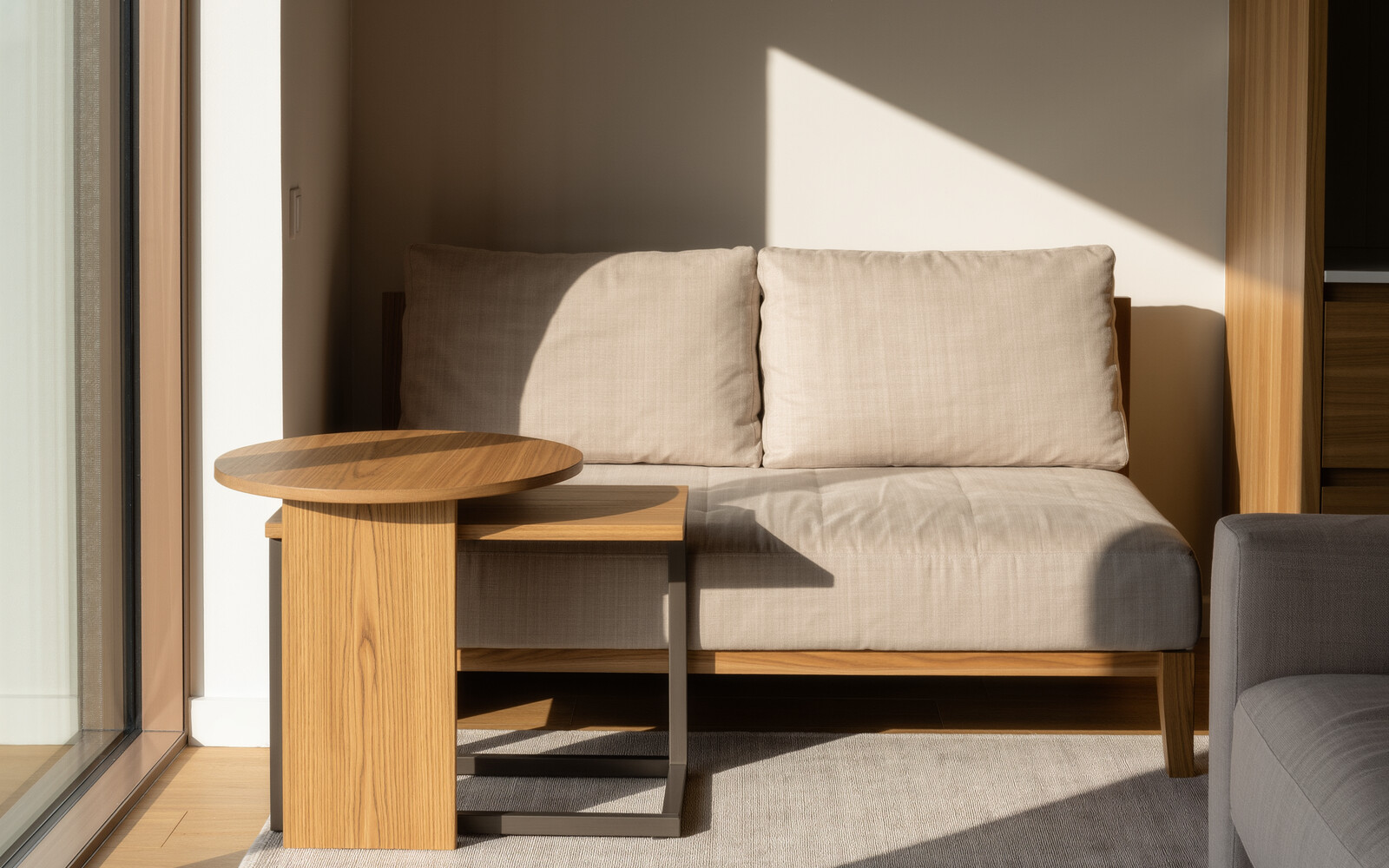
FIT FILTER 1Nesting side tables
Use this solution type only after it passes the fit checks below.
Best whenYou need occasional extra surface but not a permanent large coffee table.
Measure thisLargest table footprint, nested footprint, height relative to sofa seat and storage location.
Reject ifThe nested set still blocks the route or the larger table has nowhere to go when deployed.
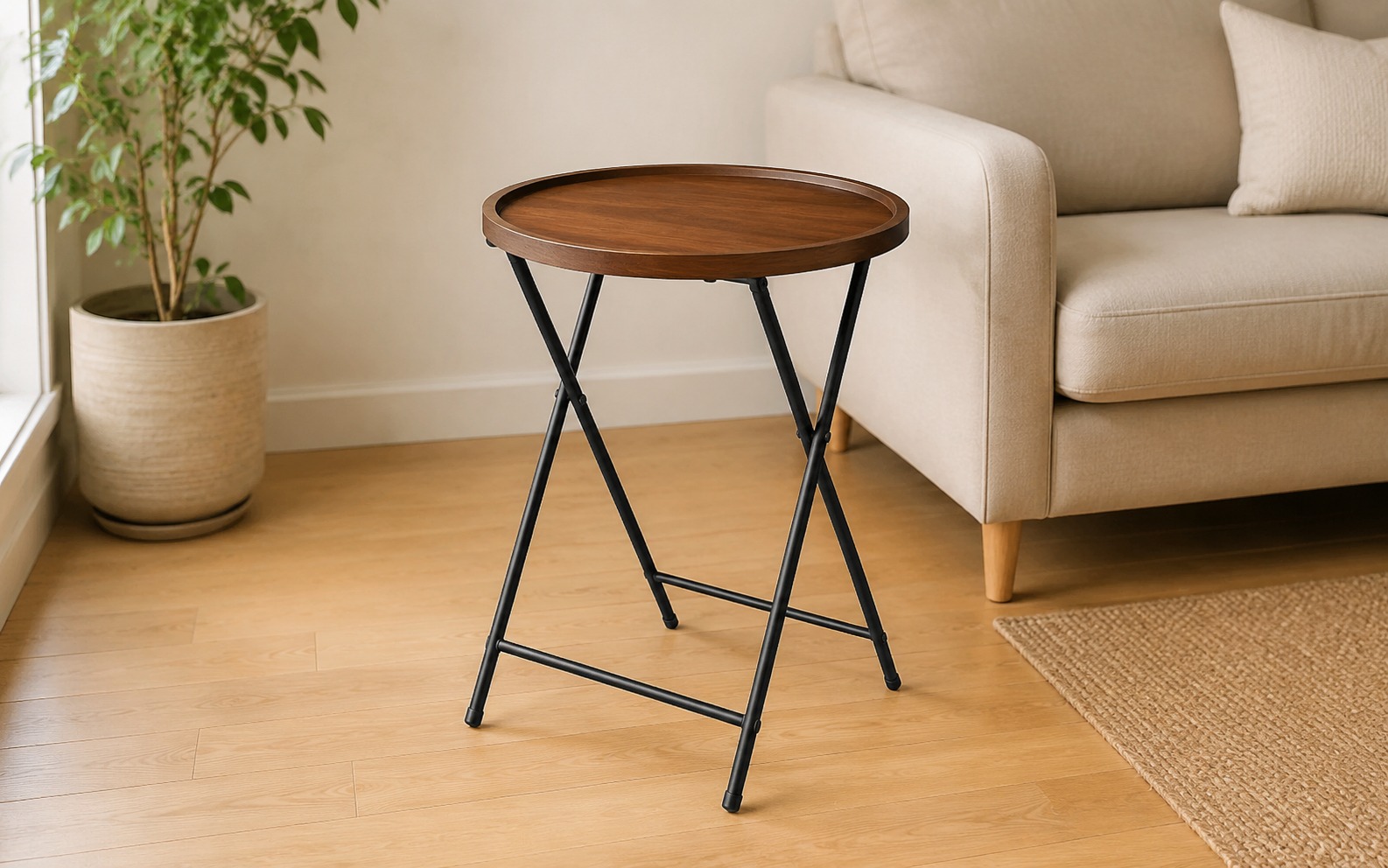
FIT FILTER 2Folding side table
Use this solution type only after it passes the fit checks below.
Best whenYou need a temporary surface for meals, laptop or guests.
Measure thisOpen footprint, folded thickness, working height and safe storage location.
Reject ifFolding hardware is unstable, folded storage is awkward or the open legs intrude into the passage.
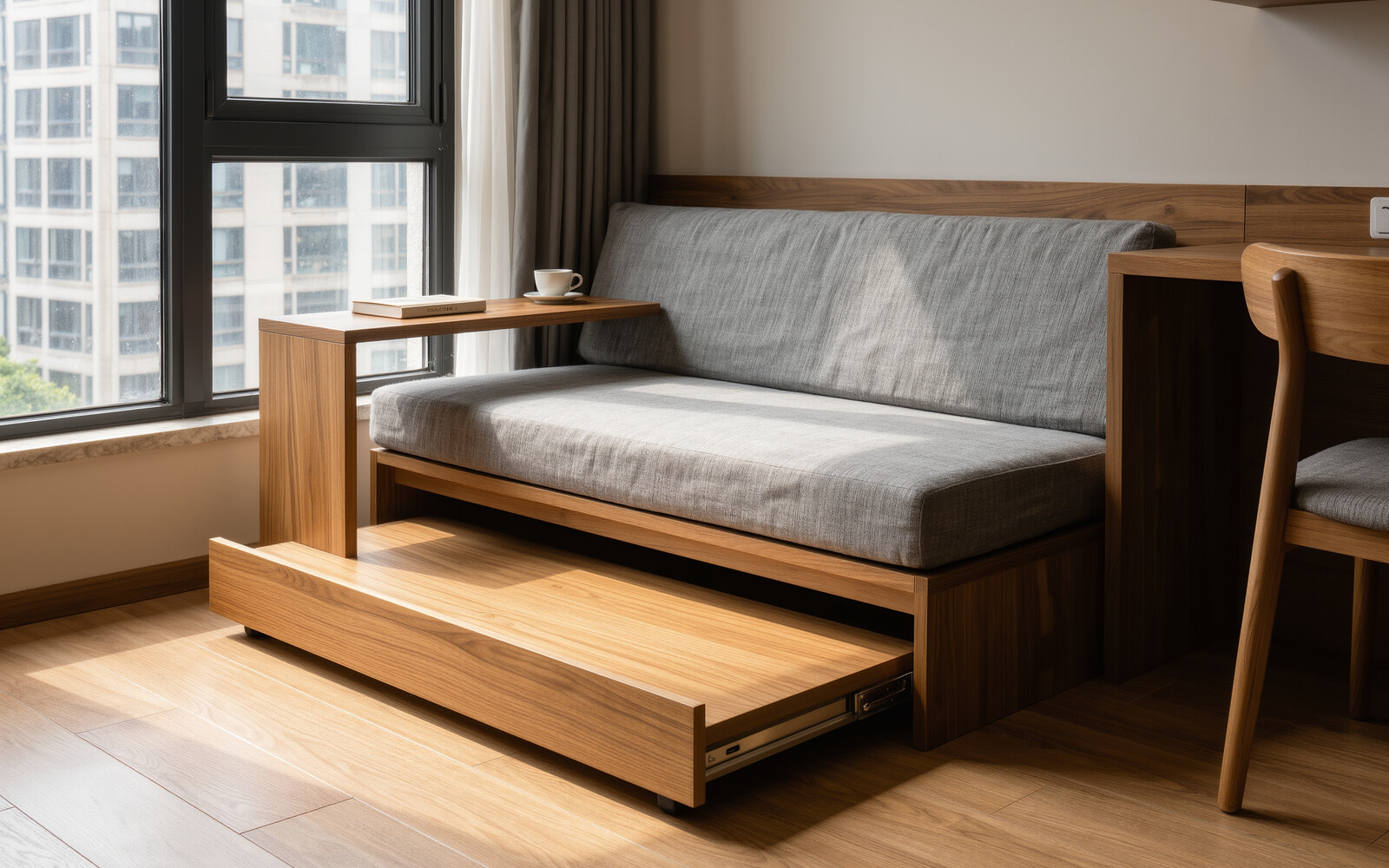
FIT FILTER 3Slim C-table / sofa side table
Use this solution type only after it passes the fit checks below.
Best whenYou want a surface that slides close to the sofa without taking the room centre.
Measure thisBase clearance under sofa, sofa-arm/seat height, top depth and side passage.
Reject ifThe base cannot slide under/alongside the sofa or the top becomes a collision point when standing up.
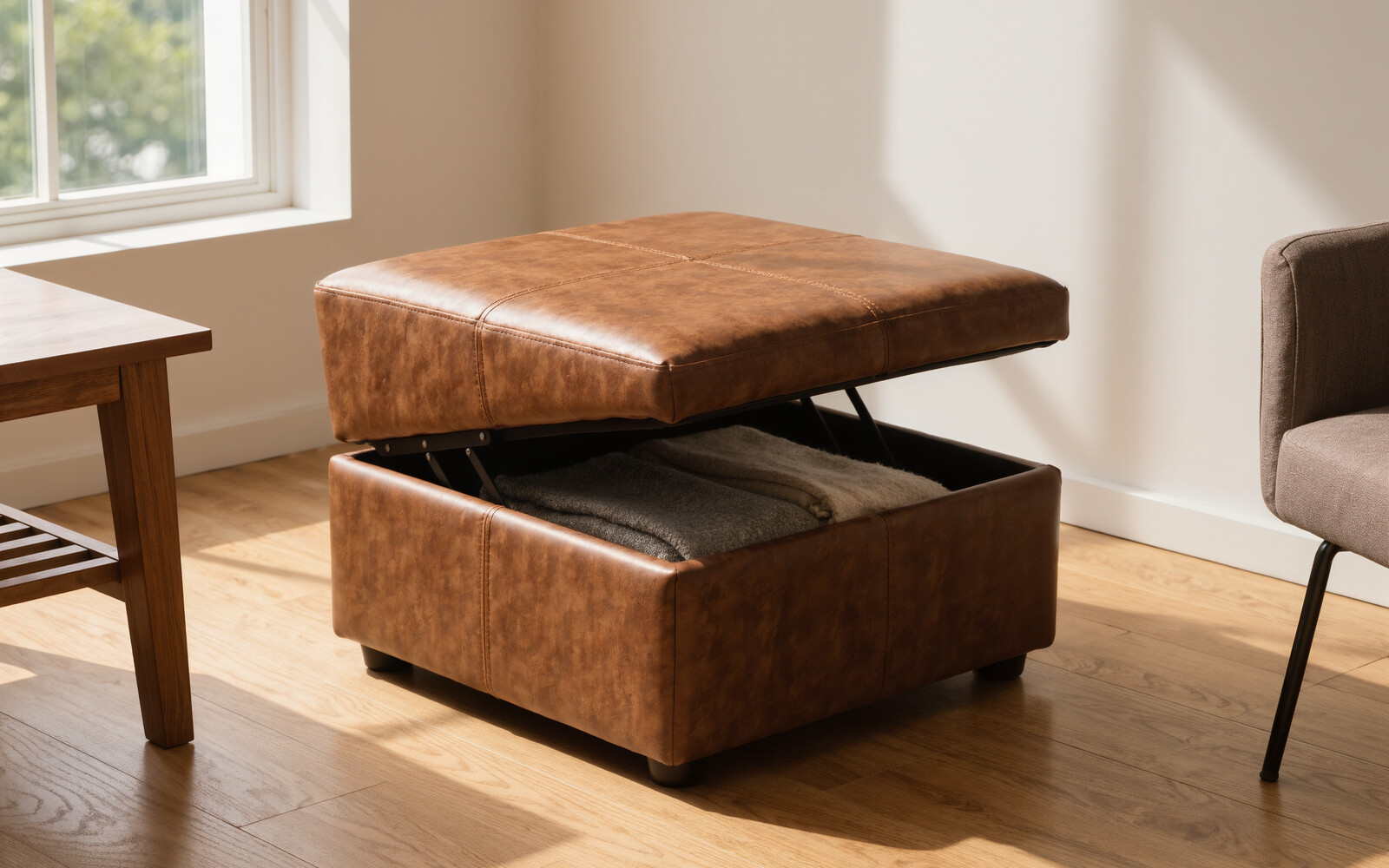
FIT FILTER 4Use a storage ottoman as the occasional centre piece
Use this solution type only after it passes the fit checks below.
Best whenYou need a footrest/extra seat and hidden storage more often than a permanent hard table.
Measure thisOpen footprint, lid-opening clearance, seat/load rating and passage around it.
Reject ifIt stays permanently in the route, cannot open where placed or duplicates seating/storage you already have.
Visuals are illustrative and show the solution type, not necessarily the exact product. Some product links may earn us a commission at no extra cost to you. Always verify dimensions, mounting surface, load limits and clearances on the product listing.
How we evaluate a small-space solution
We do not rank a solution just because it is compact. We first identify the space problem, the limiting measurement, the operating clearance and the installation constraint. A product is worth considering only when its current listing dimensions and use requirements fit those limits.
Our rule: solve the constraint first, compare at least two viable options, and reject anything that creates a new circulation, access or maintenance problem.