If a nightstand makes the walkway too tight, keep bedside essentials within reach by using the bed, wall, or headboard zone instead of the floor.
If a nightstand makes the walkway too tight, keep bedside essentials within reach by using the bed, wall, or headboard zone instead of the floor. Start with what interferes with movement or daily use, then choose the simplest solution you can maintain.
6 ways to solve the problem
Use a hanging bedside pocketA soft organizer can hold a phone, book or glasses without adding furniture width.
Mount a very shallow shelfA small wall shelf can act as a landing spot where drilling is appropriate.
Use the headboard zoneHeadboards with ledges or pockets keep essentials close without occupying the aisle.
Clamp the light instead of standing itA clamp lamp can remove the need for a lamp base and free the remaining surface.
Route charging cables deliberatelySecure the cable path so cords do not fall to the floor or cross the walkway.
Keep the bedside list shortPhone, glasses, water and one current book may be enough. Move backups and clutter elsewhere.
Small-space rule
Measure the circulation path and working zone first. Storage only helps when it improves access without making movement harder.
Why this approach works
In a small room, every addition has to justify its footprint. The most durable solutions use space that already exists, reduce the number of steps needed to put things away, and keep frequently used items easy to reach.
Before buying an organizer, test the idea with what you already own and verify the dimensions. That prevents a storage problem from turning into a crowding problem.
Start with the constraint, verify fit, then buy only when the dimensions and operating space match your room.
1 · DIAGNOSE
Keep bedside essentials within reach without sacrificing the passage beside the bed.
2 · MEASURE
Measure the clear bedside gap, mattress/bed-frame height, wall width and any drawer/door swing nearby.
3 · FIT TEST
Protect the walking clearance first; storage should occupy wall, bed-frame or truly unused gap space.
4 · REJECT IF…
Reject anything that creates a shin-level obstacle, blocks bedding, catches on the bed or narrows the main route.
MEASURE → FILTER → VERIFY
Measure the bedside envelope
Record the clear width between the bed and the nearest wall/furniture.
cm
What kind of solution fits your routine?
What your filter meansShowing all solution types. Add a measurement and choose the usable zone to narrow the shortlist.
FIT FILTER 1
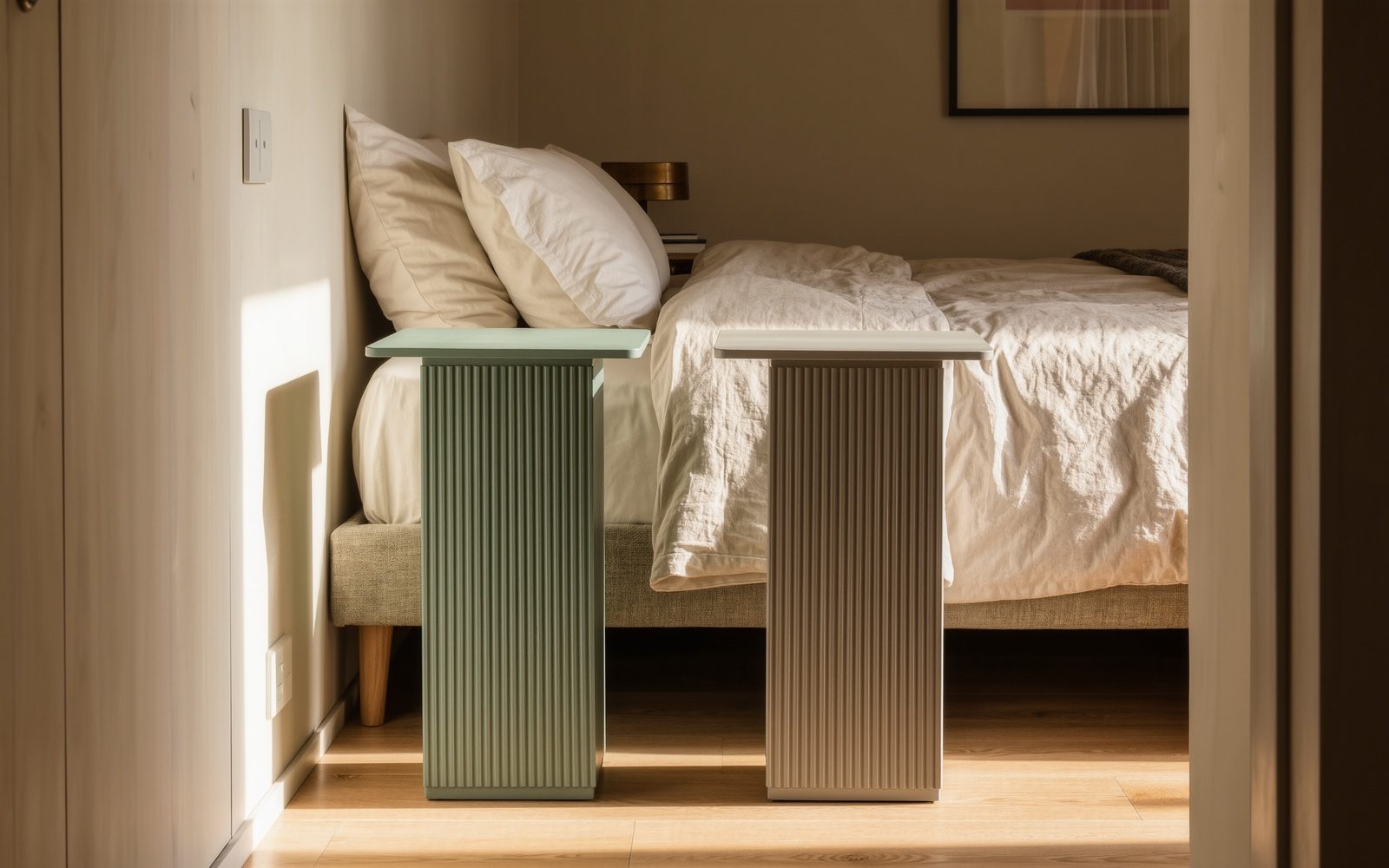
Fit storage into the bedside gap
Use this solution type only after it passes the fit checks below.
Best whenA narrow gap exists but a normal nightstand would be too wide.
Measure thisClear gap at floor and mattress height, unit depth, skirting and bed movement allowance.
Reject ifIt narrows the route too far, protrudes beyond the bed edge or cannot be reached comfortably from bed.
FIT FILTER 2
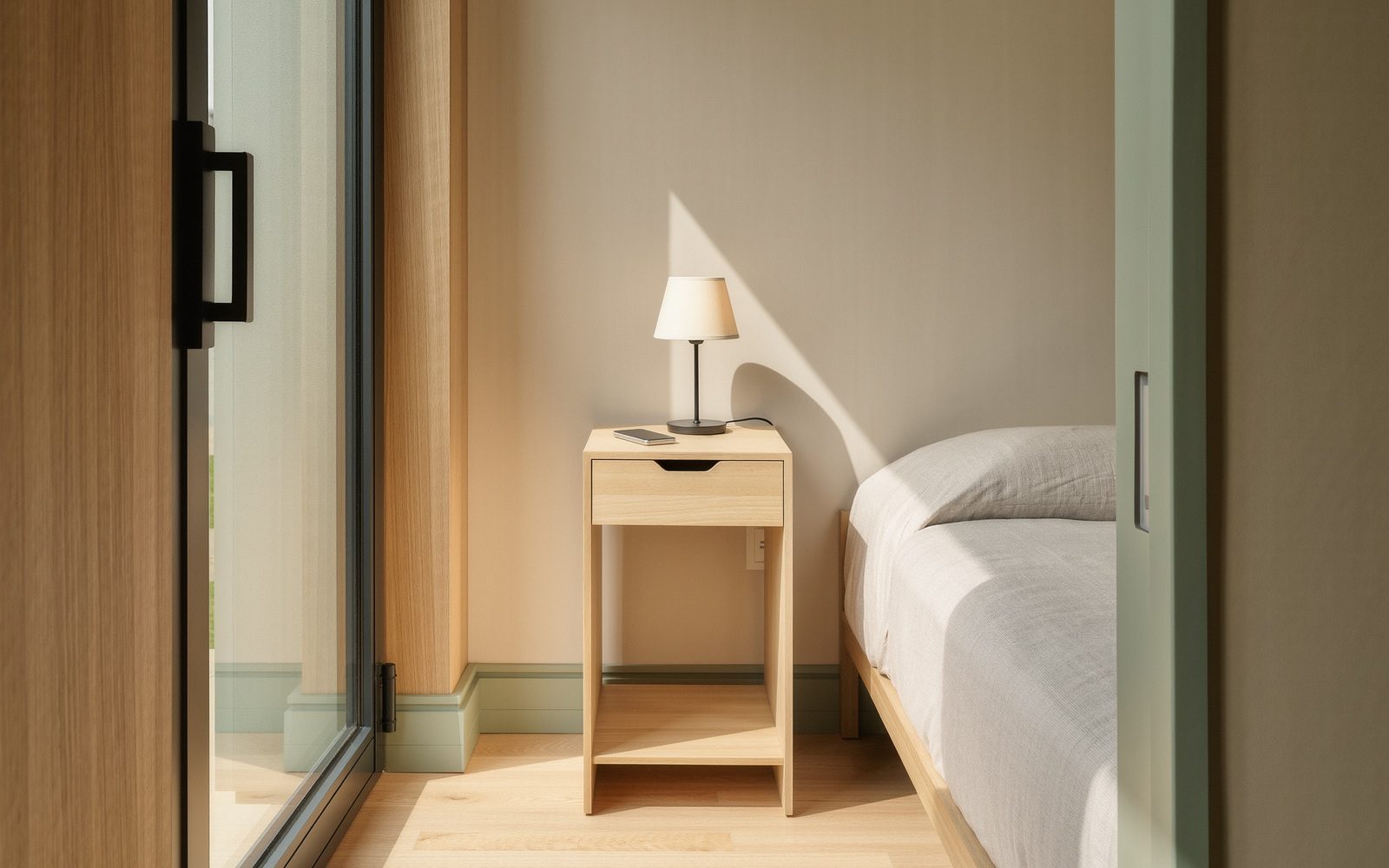
Replace bulky nightstands
Use this solution type only after it passes the fit checks below.
Best whenYou need a small landing surface but want to keep the floor visually and physically open.
Measure thisWall width, mounting height, usable depth and clearance from headboard, outlets and curtains.
Reject ifThe shelf projects into the walkway, conflicts with wiring/curtains or the wall/fixing cannot support the intended load.
FIT FILTER 3
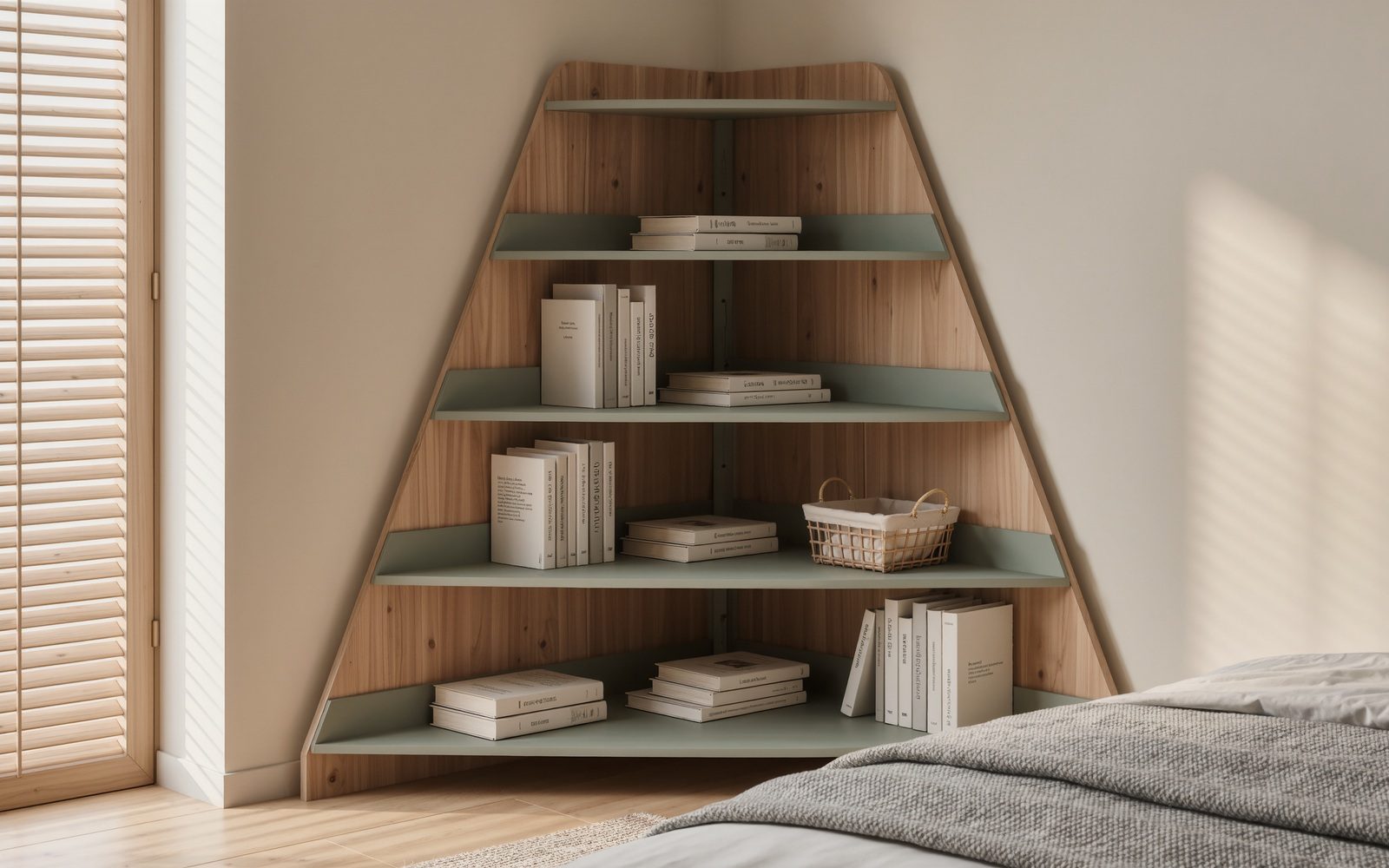
Put an empty corner to work
Use this solution type only after it passes the fit checks below.
Best whenA corner near the bed is unused and outside the main circulation line.
Measure thisCorner width/depth, access angle, nearby door/drawer swing and reach from bed.
Reject ifThe unit turns the corner into a pinch point or stores items too far away for normal bedside use.
FIT FILTER 4
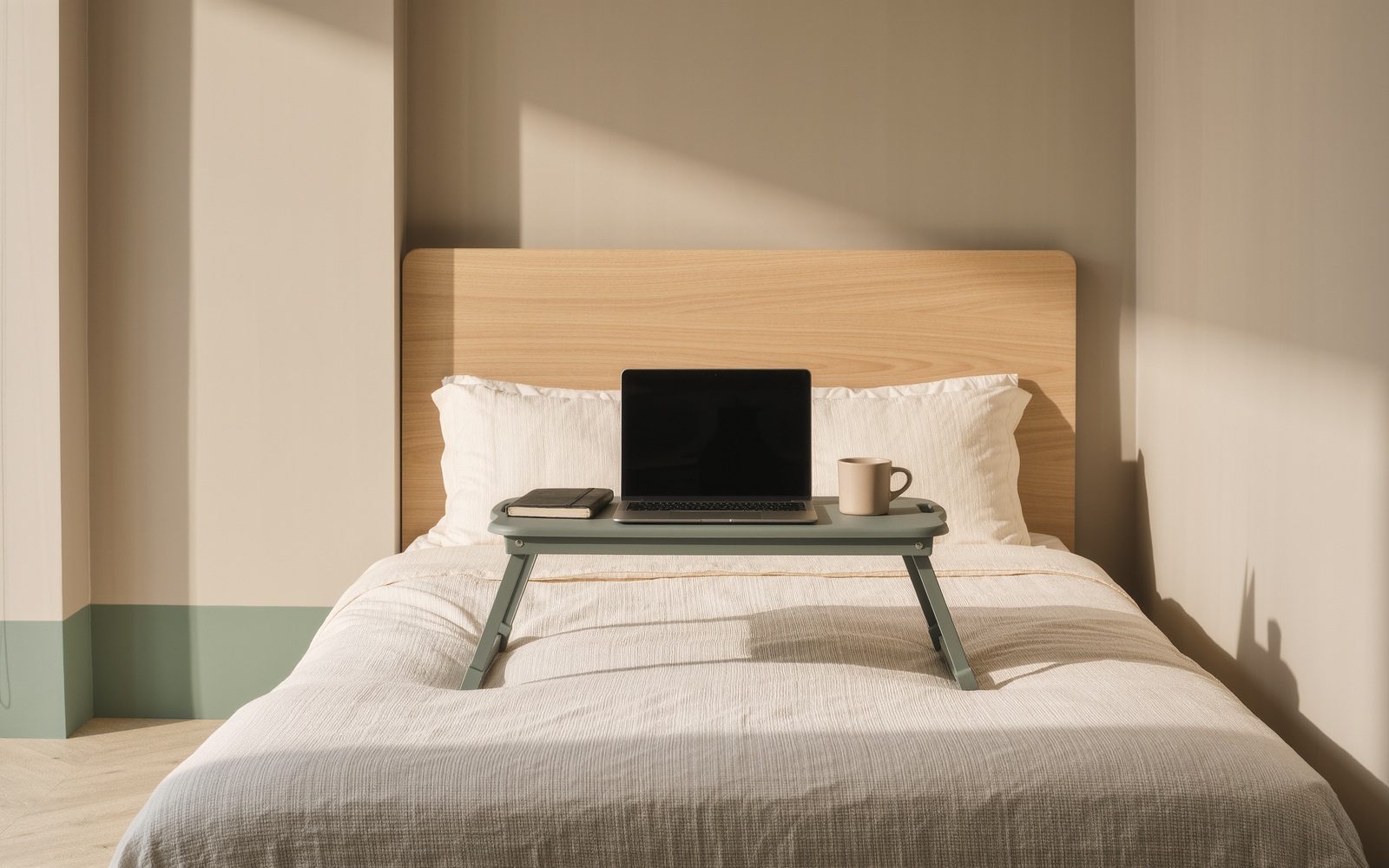
Use a temporary bed tray instead of permanent furniture
Use this solution type only after it passes the fit checks below.
Best whenYou need an occasional surface for a drink, book or laptop but cannot sacrifice bedside floor area.
Measure thisTray width/depth, mattress width, edge stability and where the tray will be stored when not used.
Reject ifIt is unstable on your bedding, blocks getting in/out of bed or has no realistic storage location.
No solution is shown for this filter. Show all solutions and compare the fit checks manually.
How we evaluate a small-space solution
We do not rank a solution just because it is compact. We first identify the space problem, the limiting measurement, the operating clearance and the installation constraint. A product is worth considering only when its current listing dimensions and use requirements fit those limits.
Our rule: solve the constraint first, compare at least two viable options, and reject anything that creates a new circulation, access or maintenance problem.
Before buying: compare 2–3 viable options. Check dimensions, operating clearance, installation method, return conditions and current price—not just the product photo.
Visuals are illustrative and show the solution type, not necessarily the exact product. Some product links may earn us a commission at no extra cost to you. Always verify dimensions, mounting surface, load limits and clearances on the product listing.