Tiny bathrooms often have more unused height than unused width. The goal is to use that height without making the room feel crowded. Start with what interferes with movement or daily use, then choose the simplest solution you can maintain.
6 ways to solve the problem
Look above the toiletA shallow shelf or over-toilet unit can use a zone that is often empty.
Stack narrow storage instead of widening itTall slim units preserve circulation better than broad low furniture.
Raise spare suppliesKeep refills and extra towels higher; reserve easy reach for daily items.
Use the inside of cabinet doorsSmall holders can organize brushes or tools without taking shelf width.
Keep visual weight lowChoose shallow, open or light-looking upper storage so the room does not feel boxed in.
Leave one vertical surface quietNot every wall needs storage. A clear wall gives the eye somewhere to rest.
Small-space ruleMeasure the circulation path and working zone first. Storage only helps when it improves access without making movement harder.
Why this approach works
In a small room, every addition has to justify its footprint. The most durable solutions use space that already exists, reduce the number of steps needed to put things away, and keep frequently used items easy to reach.
Before buying an organizer, test the idea with what you already own and verify the dimensions. That prevents a storage problem from turning into a crowding problem.
Continue with these guides
SOLUTION → FIT → PRODUCT
Concrete solutions for this exact problem
Start with the constraint, verify fit, then buy only when the dimensions and operating space match your room.
1 · DIAGNOSEAdd removable capacity without creating a new floor-space or cleaning problem.
2 · MEASUREMeasure the mounting surface, wet-zone exposure, usable wall/gap dimensions and door/shower clearance.
3 · FIT TESTMatch the fixing method to the surface first; then limit depth so the room still works when doors and shower screens move.
4 · REJECT IF…Reject adhesive/suction storage on unsuitable porous, textured or constantly wet surfaces, and anything that narrows movement.
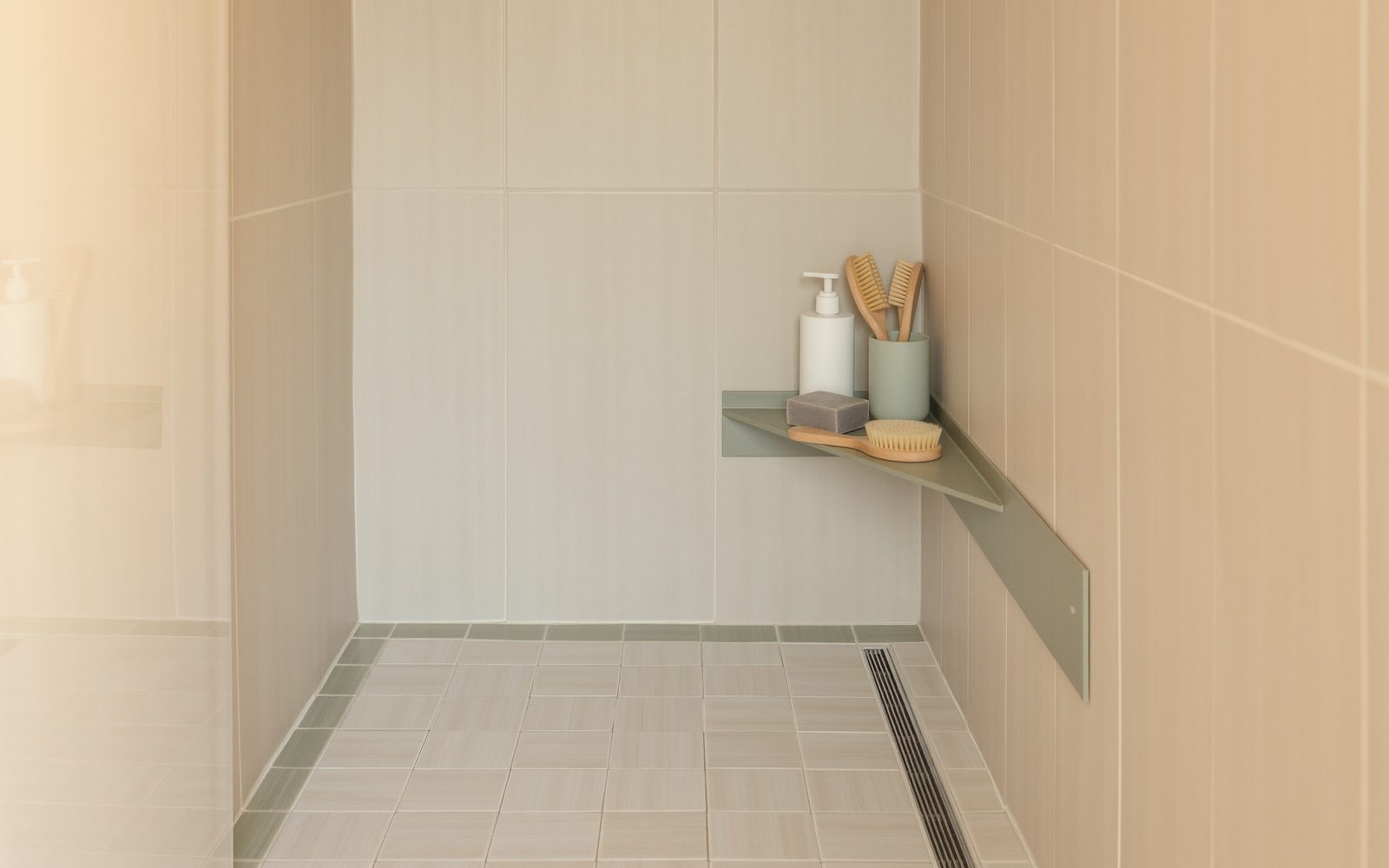
FIT FILTER 1Add storage without drilling
Use this solution type only after it passes the fit checks below.
Best whenYou have a smooth suitable surface and need removable everyday storage.
Measure thisAvailable mounting width/height, shelf depth and clearance from taps, switches, doors and shower screen.
Reject ifThe surface is unsuitable for the fixing method, the load exceeds the listing limit or removal could damage the finish.
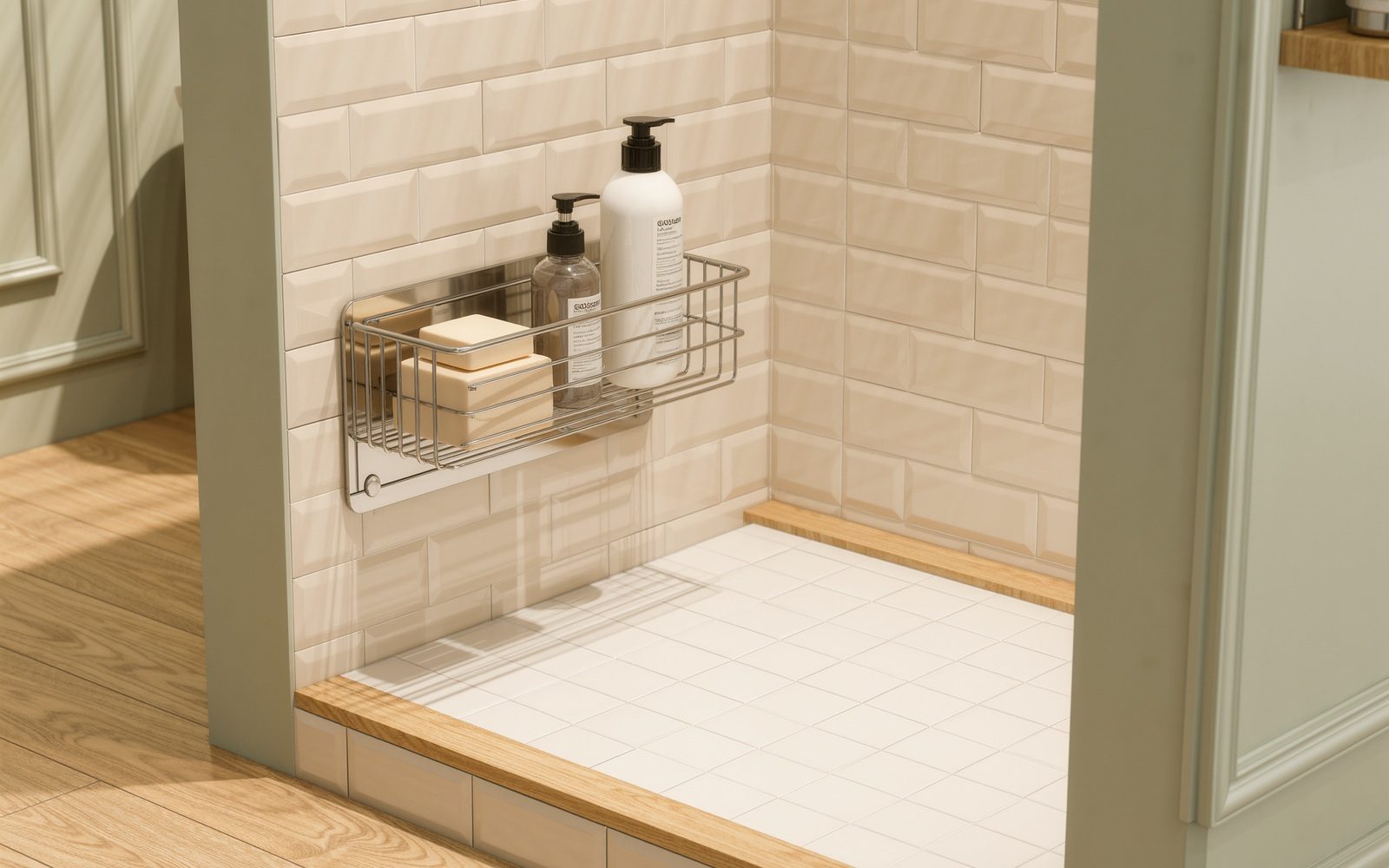
FIT FILTER 2Keep shower bottles off the floor
Use this solution type only after it passes the fit checks below.
Best whenBottles crowd the shower floor or ledge and you have a suitable vertical mounting zone.
Measure thisBottle height/diameter, mounting zone, shower-head/screen clearance and water exposure.
Reject ifThe basket projects into standing space, traps water or the fixing method is not rated for the surface/wet zone.
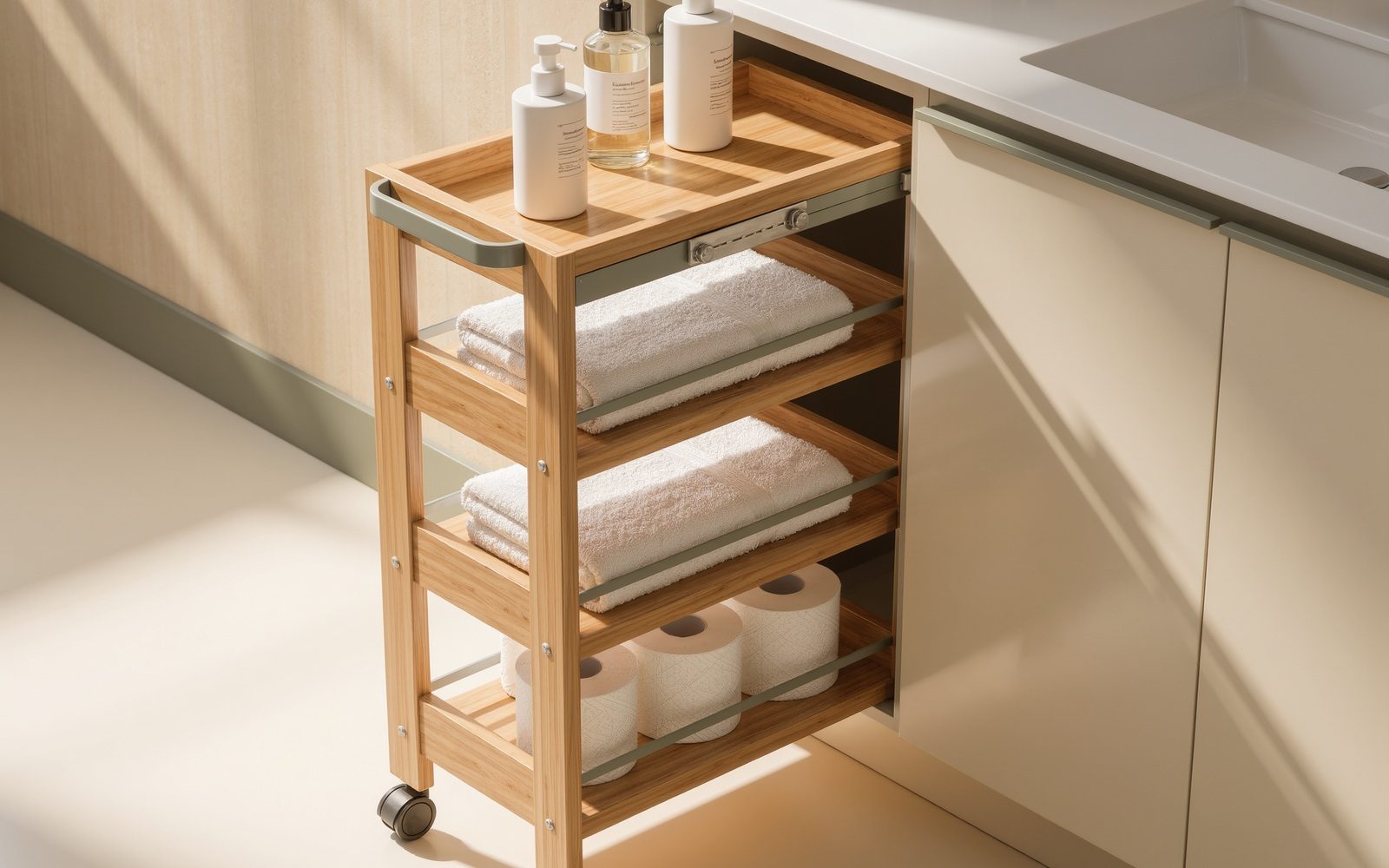
FIT FILTER 3Turn a narrow gap into storage
Use this solution type only after it passes the fit checks below.
Best whenThere is a slim dry gap beside the vanity, toilet or wall.
Measure thisGap width at several heights, floor-to-obstruction height, usable depth and cleaning access.
Reject ifThe unit blocks cleaning, door movement, towel access or projects into the main circulation path.
Visuals are illustrative and show the solution type, not necessarily the exact product. Some product links may earn us a commission at no extra cost to you. Always verify dimensions, mounting surface, load limits and clearances on the product listing.
How we evaluate a small-space solution
We do not rank a solution just because it is compact. We first identify the space problem, the limiting measurement, the operating clearance and the installation constraint. A product is worth considering only when its current listing dimensions and use requirements fit those limits.
Our rule: solve the constraint first, compare at least two viable options, and reject anything that creates a new circulation, access or maintenance problem.