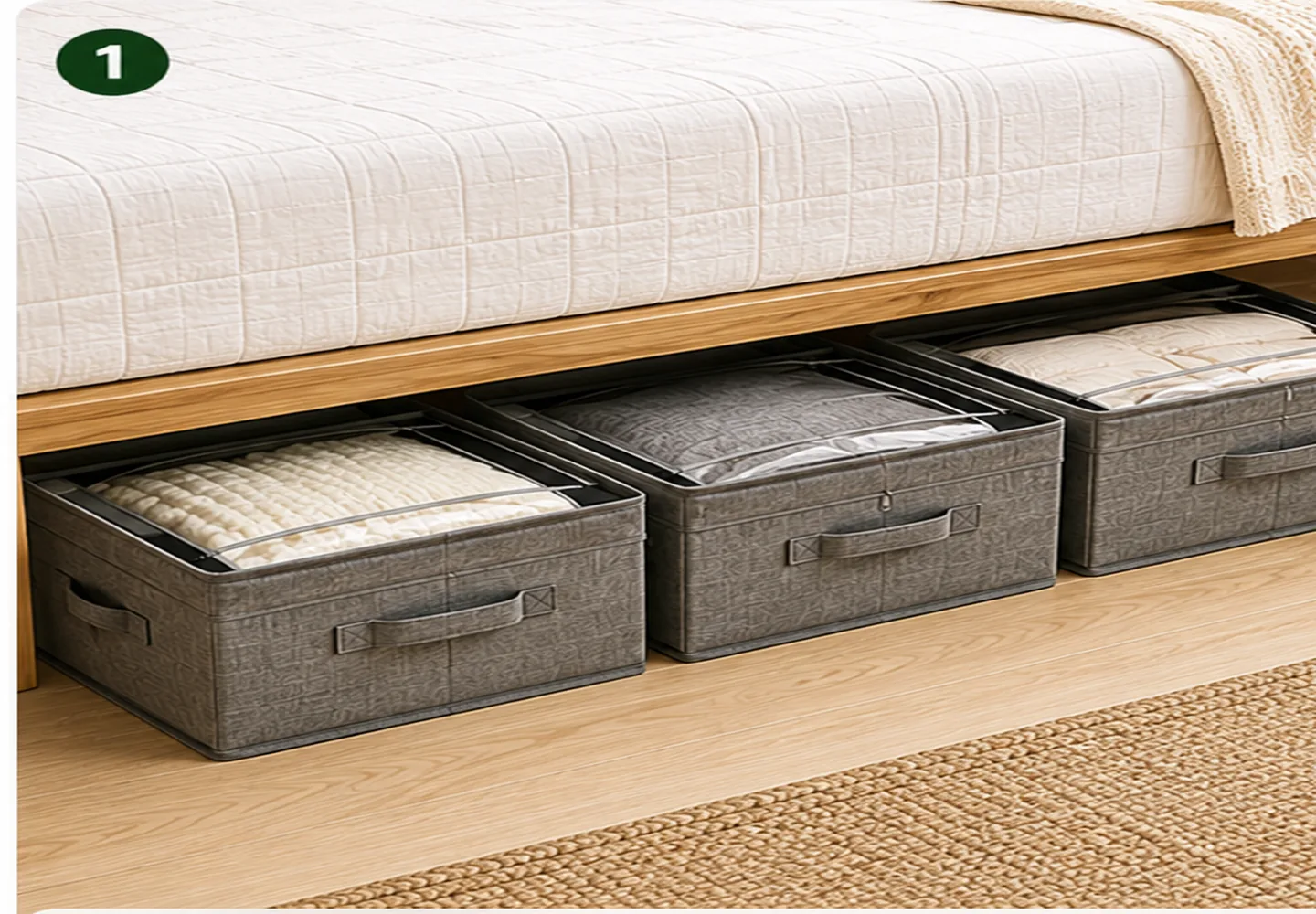
1. Use the volume under the bed
It is already part of the room's footprint, which makes it one of the first places to evaluate.
2. Take storage higher
Wall-mounted or tall storage can preserve more open floor than wide, low furniture.
3. Use the back of the door
Doors can support lightweight organization without requiring another footprint.
4. Keep bedside storage narrow
A full-size nightstand is not always necessary when the function is simply a lamp, phone or book.
5. Use overlooked wall sections
Short walls and awkward corners may be better suited to hooks or shallow storage than furniture.
6. Reduce duplicate storage
More containers can create more clutter. Edit belongings before expanding storage capacity.
7. Prefer storage that solves more than one job
In a constrained room, a useful piece can combine storage with seating, bedside function or another existing need.